Friday, April 27, 2007

Reeves Remembers Halberstam

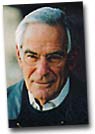
When David Halberstam died in a car crash on April 23rd, America lost one of its most influential journalists. No one has made this point as succinctly as syndicated columnist Richard Reeves.

In a column called “Journalism’s Greatest Generation” -- that really is about what Reeves sees as journalism’s greatest generation -- Reeves also manages to eulogize his friend and colleague, David Halberstam, gently, elegantly and with great respect.
Halberstam led the way, literally. There was something of Paul Revere and Thomas Paine in his journey from Harvard to becoming the only reporter on the smallest newspaper in Mississippi -- because he thought race and civil rights was the biggest (and untold) story in the country. Others came with typewriters and cameras and their hearts in their throats to make Americans confront this stain on the flag.
Reeves’ April 27th column is here.

Labels: ,

Monday, April 23, 2007

David Halberstam Dead at 73

Pulitzer Prize winner David Halberstam died this morning in a San Francisco-area car crash, just two weeks after his 73rd birthday.

According to the San Jose Mercury News, “Halberstam, author of 15 bestsellers, died at the scene after the car in which he was a front-seat passenger was broadsided by another vehicle. The coroner’s office said he died of massive internal injuries.”

The resident of New York had given a speech at UC-Berkeley on Saturday night on “Turning Journalism into History.” The Mercury News reports that, at the time of his death, Halberstam was on his way “to an interview for his next book, about the Korean War.”

Perhaps best known for his work covering the Vietnam war for the New York Times in the 1960s -- the work that led to his Pulitzer at age 30 -- in later years, Halberstam turned his keen eye and passionate voice on a wide variety of topics of sharp interest to Americans.

Between 1961 and 2005, Halberstam wrote 21 books -- 15 of them bestsellers -- including The Making of a Quagmire: America and Vietnam during the Kennedy Era (1965), The Best and the Brightest (1972) about the Vietnam war and War in a Time of Peace (2002) which was a runner-up for the Pulitzer Prize for non-fiction.

In a 1993 interview with the Mercury News, Halberstam spoke eloquently about his life and career.
“It’s been a wonderful life,” he said. “Actually, when I think about my career I am sometimes stunned. I’m stunned by the richness of it. It gave me all the things I ever wanted. I loved being a reporter.”
The Mercury News piece is lovely and it’s here. AP adds its voice here. This is what Reuters had to say.

Labels: ,

.