Saturday, November 14, 2009

A Cabin of One's Own

I have long been fascinated by the homes and haunts of writers -- where they grew up, where they lived as adults, and especially where they wrote. This particular strain of the “gentle madness” has taken me to Nathaniel Hawthorne’s House of Seven Gables, Mark Twain’s home, in Hartford, Connecticut, James Thurber’s boyhood home, in Columbus and one of my favorite places on earth, Thomas Jefferson’s experiment in architecture.

So, I was pleased to see the recent Wall Street Journal piece about Tim Cahill’s writing cabin along the edge of the Absaroka-Beartooth Wilderness, in southwestern Montana. Cahill is one of our most prolific and entertaining travel writers, the author of A Wolverine is Eating my Leg, Pass the Butterworms, and Lost in My Own Backyard. Cahill is also a founder of Outside Magazine.

Cahill has owned his 500 square foot cabin since 1991 and uses it as a retreat for week-long writing stretches when he feels the need for isolation. The rest of the time, he resides in his home in Livingston, about an hour away. A daily hiker when he’s in residence, Cahill tells reporter Alexandra Alter, “My backyard, honest to God, is pretty much the size of Switzerland,” referring to the greater Yellowstone area.

Of course, Montana has long attracted writers and fiction; the names James Crumley, Thomas McGuane and Jim Harrison. And judging from the slideshow, it sure looks like a nice place to write a book.

The Wall Street Journal piece is here.

Labels:

Monday, January 05, 2009

Review: Little Pink House by Jeff Benedict

Today in January Magazine’s non-fiction section, contributing editor Stephen Miller reviews Little Pink House by Jeff Benedict. Says Miller:
It is often said that bad cases make for bad law, and the United States Supreme Court case of Kelo v. New London certainly contained a bad set of facts.

Anxious to reverse the decay in New London, Connecticut, as well as neutralize political opponents, Governor John Rowland and his staff dsevised a massive urban renewal project along the New London waterfront. However, a Republican Governor’s involvement in a project in heavily Democratic New London was a non-starter, so the New London Development Corporation was reinvigorated to champion development and manage the resources that would flow from the state.
The full review is here.

Labels: ,

Friday, September 05, 2008

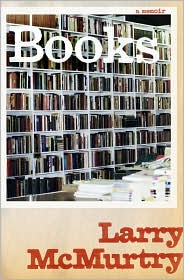
Review: Books by Larry McMurtry

Today in January Magazine’s biography section, contributing editor Stephen Miller reviews Books by Larry McMurtry. Says Miller:
Larry McMurtry’s literary street cred needs no boost from anyone. The author of, most famously, The Last Picture Show, Lonesome Dove and Terms of Endearment has been pounding the keys of his typewriter for well over 40 years. Along the way, he’s stumbled into Hollywood, winning an Academy Award for his screenplay of E. Annie Proulx’s short story, “Brokeback Mountain”. What is perhaps less well-known is that during all of this time, McMurtry has also been a book scout, rare and antiquarian book dealer, and proprietor of Booked Up, a sprawling complex of used bookstores managed in a highly personalized and somewhat defiant style (meaning no sales via the Internet and only two catalogs in 35 years). Transplanted from the tony environs of Washington D.C.’s Georgetown to McMurtry’s long-time residence of Archer City, Texas, it’s the American version of the Welsh book destination Hay-on-Wye, quite an achievement for a boy who grew up in a town with no books. In Books, McMurtry offers the third mini-memoir following Walter Benjamin at the Dairy Queen and Roads.
The full review is here.

Labels: ,

Tuesday, March 25, 2008

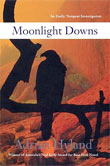
Review: Moonlight Downs by Adrian Hyland and The Fourth Man by K.O. Dahl

Today in January Magazine’s crime fiction section, Stephen Miller looks at Moonlight Downs by Adrian Hyland and The Fourth Man by K.O. Dahl. Says Miller:
In the international world of crime fiction, it seems that Australia and Norway have been chronically underrepresented. Debut author Adrian Hyland seeks to correct the Australian oversight with his new tale, Moonlight Downs.

Hyland’s heroine is Emily Tempest, a half-Aboriginal roustabout, who has returned home to Moonlight Downs, her tribal homeland in the Outback after years of wandering the globe and racking up what she believes to be adventures.
Later in the same piece, Miller says:
From the opposite end of the world comes veteran author K.O. Dahl and The Fourth Man, his series debut featuring Oslo Detective Inspector Frank Frolich, a sad sack of a man with little going for him other than work. While participating in a raid on a local store, Frolich literally falls upon an attractive young woman, in the wrong place at the wrong time. Elizabeth Faremo becomes the object of his obsession, nearly causing an eclipse in every other aspect of Frolich’s life. To call their eventual association an “affair” is to almost grant it a dignity that it doesn’t quite deserve; it’s more like a series of one-night stands.
Read the complete review here.

Labels: ,

Sunday, March 02, 2008

Modern Libraries Considered

Witold Rybczynski is one of my favorite writers about current trends in architecture and city life. While he is an architect by training and temperament, he’s also an astute commentator of how we live in a post-industrial digitized society. He contributes frequently to Slate magazine, and earlier this week, Slate posted a slide show and commentary from Rybczynski on the state of urban public libraries. The title of the piece, “How Do Your Build a Public Library in the Age of Google,” is intriguing but left questions frustratingly unanswered to any real degree. His thesis appears to be that public libraries are among the last bastions of downtown revitalization, perhaps endangered, and starting to move away from the printed media and into computers, the Internet, and as the location for downtown hangouts; hardly a “stop the presses” type of newsflash, but it does allow us to view a slide show of some cool architecture.

As it happens, I’ve been to two of the libraries featured -- Chicago and Seattle. I visited the Harold T. Washington Library in downtown Chicago several years ago. The exterior is every bit as bold as Rybczynski’s photo demonstrates: a lot of rooftop ornamentation and nearly pink in color. It clearly makes you think of the building as a modern-day temple of learning. I have no active memory of its interior, which makes me think it must be pretty standard issue. In any other city, the Washington Library could be the postcard image. In Chicago, with its world-class collection of architecture, it’s pretty much an also-ran. Look it up if you’re in the neighborhood, but hardly worth an excursion out of one’s way.

The organizers of 2007’s Left Coast Crime were thoughtful to book the convention at a hotel just two blocks from Rem Koolhaas and Joshua Prince-Ramus’ enormous library in downtown Seattle. This building was all the rage when it first opened in 2004, getting buckets of ink in architectural trade journals and in the mainstream media (it’s always looked to me like a symbolic “to be read” pile of books, not cleanly stacked, but still managing to stay vertical). And, it’s clearly become a tourist attraction for archigeeks like me, as I took the 45-minute guided tour with several out-of-towners.

My first thought upon walking into the street-level “Living Room” space was “thank God this wasn’t built in a warmer climate.” The thousands of windows that form a greenhouse-type environment would surely sautee’ patrons in a city like Phoenix or Orlando. As it happens, it’s a nice inviting space full of light (when the Seattle weather deems fit to bestow some sunshine), but it left me a little, well, cool. With all of the activity both inside the front revolving doors and the street scenes, I don’t feel like I could read anything requiring any degree of concentration. One gets the idea of sitting inside a department store window.

For all of the hype regarding the design and distinctive features like the bright yellow escalator well and the 4th floor blood red hallways, the Seattle Library struck me as an act of architectural hubris that failed to consider that libraries need to be user-friendly and easy to navigate. It’s really easy to get hopelessly turned around in there.

The Seattle Library contains all the bells and whistles necessary in a large civic book repository these days: the state-of-the-art book retrieval and return system (much of which is on view), an auditorium, a separate ground floor section for “popular” books that are in frequent demand that you can grab and run without having to wander into the upper floors, and music rehearsal rooms (music rehearsal rooms in a library?). But it’s intimidating and I felt I was being processed instead of being welcomed.

Of course, if you want to talk about libraries as tourist attractions, there’s no better example than the Reading Room, now in the center of a glorious refurbishment of the British Museum, where the British Library once resided. Architect Norman Foster has created a magnificent piazza inside this old war horse of a building, and the Reading Room positively gleams. It’s not difficult to imagine Karl Marx skulking in his carel scribbling away at what would become Das Kapital, or Charles Dickens, George Bernard Shaw, Virginia Woolf, or any of the other British literary luminaries stopping in while walking the streets of Bloomsbury. The Reading Room continues to be used for exhibits and special presentations, but the rest of the British Library moved in 1997 to its current location near King’s Cross.

Both Rybczynski’s Slate essay and the slide show that accompanies it are here.

Labels:

Thursday, November 29, 2007

Review: Runoff by Mark Coggins

Today, in January Magazine’s crime fiction section, contributing editor Stephen Miller reviews Runoff by Mark Coggins. Says Miller:
Runoff, Mark Coggins’ fourth novel to feature Bay Area private eye August Riordan, opens with one of the most original action sequences I’ve read. Waiting in his Galaxie 500 on a self-appointed stakeout, Riordan searches for the person or persons responsible for ripping off automated teller machines in downtown San Francisco. By that, I don’t mean they hack into the computer system by punching an obscure code and then wait for the money to flow out like a river. No, this thief is physically removing ATM machines. And not long after Riordan settles in with his copy of Downbeat, the culprit pulls into view behind the controls of a John Deere backhoe in a scene that wouldn’t be out of place in a Michael Mann film.
The full review is here.

Labels: ,

Thursday, November 01, 2007

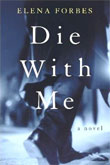
Review: Die with Me by Elena Forbes

Today, in January Magazine’s crime fiction section, contributing editor Stephen Miller reviews Die with Me by Elena Forbes. Says Miller:
Forbes, a former investment banker, develops her story in much the same manner as the late Ed McBain did his 87th Precinct books....

First-time novelist Forbes propels this story forward expertly and deftly shifts her narrative to follow Tartaglia, Donovan, Steele and even, from time to time, the killer. It’s a bravura juggling act, difficult for experienced writers to pull off with aplomb, and Forbes is able to keep everything churning almost without a misstep.
The full review is here.

Labels: ,

Wednesday, October 31, 2007

Yet Another Reason to Go On Living

From Critical Mass, the blog of the National Book Critics Circle Board of Directors, comes word that Ross King (The Judgment of Paris, Michelangelo and the Pope’s Ceiling) is hard at work on another book on the never-exhausted subject (at least for me) of artists. King tells us his next major project is, “a study of Leonardo da Vinci’s last years in Milan – his paintings, inventions and writings. I’m a bit superstitious about saying more at this early stage, but it’ll be published by Walker & Co., who have done such a wonderful job with my previous books.”

To further drive away any idle time, King will also be curating an exhibit of Canadian post- impressionist painters, the Group of Seven, at the McMichael Canadian Art Collection, near Toronto.

King, who has also published two works of historical crime fiction, Ex Libris and Domino, goes on to say, “I’m looking forward to my researches taking me everywhere from the churches and cafes of Milan to the lakes and forests of northern Canada. But I suspect I’ll also be spending a lot of time sweating over my computer back at home as I try to meet my various deadlines.”

Great news, indeed. Read the brief encounter here.

Labels:

Friday, September 14, 2007

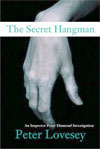
Review: The Secret Hangman by Peter Lovesey

Today, in January Magazine’s crime fiction section, contributing editor Stephen Miller reviews The Secret Hangman by Peter Lovesey. Says Miller:
At a time when British crime fiction seems tipped toward the noir edge of things, it is a treat to come across a classic puzzle story. Such is the reward in store for readers who delve into the ninth entry in the Inspector Peter Diamond series, The Secret Hangman.
The full review is here.

Labels: ,

Monday, August 13, 2007

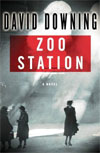
Review: Zoo Station by David Downing

Today, in January Magazine’s crime fiction section, contributing editor Stephen Miller reviews Zoo Station by David Downing. Says Miller:
You can’t and shouldn’t judge a book by its cover, but sometimes you simply cannot help yourself. Picture a grainy black-and-white photograph circa 1940 or so. Three women are in the foreground of the image, two of them in conversation and one standing off by herself. There’s a haze that prevents us from seeing what’s in the background. Smoke? Fog? Dust in the air? Off to the left, there appears to be a Gothic church spire, but it might be something else. A torrent of light streaks across the image, upper right down to lower left, coming from the giant windows overhead. The image appears to be that of a train station, perhaps the old Penn Station in New York City or Victoria Station in London. The scene is sinister and subtle, full of secrets kept and secrets betrayed. Without reading the jacket copy, it’s clear that Zoo Station is a spy novel. And if you like your tales spiced with morally ambiguous characters right out of Graham Greene, this is a train you need to be aboard.
The full review is here.

Labels: , ,

Tuesday, June 12, 2007

Review: Soul Patch by Reed Farrel Coleman and Dead Madonna by Victoria Houston

Today, in January Magazine’s crime fiction section, contributing editor Stephen Miller reviews Soul Patch by Reed Farrel Coleman and Dead Madonna by Victoria Houston. Says Miller:
The mantra of real estate is location, location, location and the same often holds true for modern crime fiction. With only so many plot lines to use, and with many authors content to repeat what has worked before, what often separates good mysteries from the pack is their setting. If an author is really at the top of his or her game, the setting becomes another character, enriching not only the work as a whole, but brightening the component parts as well. Independent press Bleak House Books has released a pair of books in which the setting is not only interesting, but vitally important.
The full review is here.

Labels: ,

Thursday, May 31, 2007

Review: Land of Lincoln by Andrew Ferguson

Today, in January Magazine’s non-fiction section, contributing editor Stephen Miller looks at Land of Lincoln by Andrew Ferguson. Miller says:
Abraham Lincoln has been dead and buried for over 140 years, but that hasn’t stopped a lot of folks from thinking about him -- a lot. That's the central theme of Andrew Ferguson’s Land of Lincoln: Adventures in Abe’s America, an exploration of Lincoln’s presence in modern American culture. It’s a marvelous addition to anyone’s summer reading list.
Read the full review here.

Labels: ,

Monday, April 23, 2007

Birthday for the Bard

Today, April 23, is the date generally accepted by scholars with a special interest in these matters as the birthday of the man we know as William Shakespeare, born in Stratford-upon-Avon in 1564.

Shakespeare was baptized on April 26, and the custom in Elizabethan England was that children were baptized three days after birth. What is undisputed is that Shakespeare also died on this date, in 1616, also in Stratford-upon-Avon.

The dates of birth and death are about all we know that is beyond controversy, and almost all we know about a man who left few footprints during his lifetime. Indeed, his life was poorly chronicled, leading to a great deal of scholarly speculation.

We know that Shakespeare married a pregnant Anne Hathaway, eight years his senior, in 1582. The couple had three children, two of whom survived infancy. The Shakespeare marriage was said to be an unhappy one, with Shakespeare spending years at a time in London, attending to his theatrical career. There is no evidence that Hathaway ever joined her husband in London, and in his final will and testament, Shakespeare famously left his wife his “second best bed.” Opinions differ about what this meant, and if it was meant as snub at all, since superior beds were meant to be reserved for visitors.

The controversy over the Shakespeare marriage pales in comparison to the central question regarding Shakespeare that resounds to this day: did this “man from Stratford,” with little formal education, actually write the plays attributed to him? In the 18th Century, doubts began to surface concerning the authorship of the 37 plays and over 150 sonnets.

The case against the Stratford man consists mainly of the following: the author of the plays possessed a vast knowledge of English history and Continental Europe, as well as the inner-workings of the monarchy. The plays are sprinkled with references to foreign languages (indeed, Henry V’s courtship of his future wife is conducted nearly entirely in French). How could someone as intelligent, politically connected, and as boldly theatrical as Shakespeare have managed to live and die without leaving more biographical data? Or, to state it in a way that is less politically correct, how could the greatest works in the English language have been written by some rube from Stratford who was completely removed from the aristocracy?

The current leading contender to the crown of the “true author of Shakespeare’s plays” is Edward de Vere, the Earl of Oxford, and the proponents of this view, which includes noted actor Derek Jacobi, refer to themselves as “Oxfordians.” Not surprisingly, those who believe that Shakespeare wrote Shakespeare call themselves “Stratfordians.”

The authorship question will never be resolved, and exists now mainly as an academic parlor game. What matters is that Shakespeare continues to be performed all over the world and books on matters Shakespearean continue to be produced in great number. In 2004, Harvard professor Stephen Greenblatt published Will in the Word: How Shakespeare Became Shakespeare to great critical acclaim. British broadcaster Michael Wood produced In Search of Shakespeare in 2003, in which Shakespeare was examined against the backdrop of Elizabethan England. The list of books in print and available seems almost infinite.

The Royal Shakespeare Company continues to perform the Bard’s works in Stratford and London. Shakespeare’s Globe Theatre presents outdoor productions on the south bank of the Thames in London every summer. The Stratford Festival of Canada presents Shakespeare in repertory annually from April to October in its lovely Ontario setting.

“The play is the thing” after all, and fortunately, it’s not difficult to find Shakespeare performing nearby, wherever you are.

Labels: ,

Thursday, April 05, 2007

Review: Magic City by James W. Hall

Today, in January’s crime fiction section, Stephen Miller looks at Magic City by James W. Hall. Says Miller:
... to call Magic City a yarn about the chase for a single photo is to simplify it to the point of caricature. Hall layers so much more into this novel: Miami social history during the time of the heavyweight fight; the boiling passions of the exiled Cuban community that took root in Miami (and is still largely there, anxiously awaiting Fidel Castro’s death); the mobsters who reigned in 20th-century Miami and nearly made Havana their next home base; and CIA operatives who were barely wet behind the ears during the Bay of Pigs invasion and are still, four decades later, awaiting their turn at claiming the ever-elusive glory that would have been theirs if not for their own tragic incompetence.
Read Miller’s review here.

Labels: , ,

.