Tuesday, April 07, 2015

Interview: Ona Russell author of Rule of Capture

In Ona Russell’s latest novel, Rule of Capture, we are in Los Angeles in 1928.

One of the victims of a Ponzi scheme, Ohio probate officer Sarah Kaufman is in the city to attend the trial of the perpetrators, in particular of the “friend” who convinced her to invest. Sarah is eager for justice and committed to seeing the trial through. But when a Mexican woman she barely knows winds up dead, Sarah’s plans are thrown upside-down. She finds herself in a nightmarish trial by fire, one that takes her from the glamour of Hollywood to the Tijuana frontier, tests her deepest beliefs and leads her to discover not only a killer, but a part of Los Angeles built on a terrible secret.

The full interview is here.

Labels:

Wednesday, October 22, 2014

Of Brothers and Big Shots, Crime and Coney

Like many readers, I expect, I first heard of Kevin Baker following the publication of his 1998 novel, Dreamland. That book, set in New York City in 1910, was “a wild amusement-park ride on a continuous loop,” to quote from Thomas Mallon’s review in The New York Times. Dreamland, he continued, “is historical fiction at its most entertaining and, in a number of spots, most high-handed.” Kirkus Reviews, meanwhile, focused on the book’s “generous display” of historical detail:
The various facets of New York and Coney Island, where the ornate park of the title is located, are scribed in intimate detail: the notorious jail The Tombs, City Hall, the Triangle garment factory, immigrant housing, whiskey bars, and strip joints, all are nicely animated. Meanwhile, dozens of characters stroll through these various locales: Sigmund Freud and Carl Jung visit New York and observe the vulgarity of America; Trick the Dwarf tells of the bizarre and the humane at Dreamland -- the dwarfs and the bearded ladies -- which is the most familiar world he knows; and Esther, a garment worker alienated from her immigrant family, takes an active role in the labor movement. Also on hand are Gyp the Blood, a small-time criminal; Big Tim, the Tammany politico, plus Kid Twist and Sadie and Clara.
Before it was engulfed by flames in 1911, Dreamland was one of Coney Island’s most grandiose, and in some ways most eccentric, public entertainments. Baker’s own Dreamland was hardly less ambitious, and made me hungry for more of his work. Fortunately, the author has satisfied my appetite on a fairly regular basis ever since, releasing Paradise Alley in 2002, Strivers Row (featuring a fictionalized Malcolm X) in 2006 and, in 2013, The Big Crowd -- which was finally issued in paperback this fall.

A fairly exceptional New York history blog called The Bowery Boys explains that The Big Crowd turns on the mystery of the 1941 “suicide” of Abe Reles, aka Kid Twist, a successful mob hit man who died, tumbling from a hotel room window, while in police custody -- and in the midst of testifying against some of the city’s most notorious gangsters. However, the emotional center of The Big Crowd is largely dominated by Charlie O’Kane, a bigger-than-life character based openly on William O’Dwyer, a former district attorney who won national celebrity through his prosecution of organized-crime figures, and was elected in 1946 as New York City’s 100th mayor -- only to later be brought down by controversy having to do with police corruption.

The Bowery Boys opines that “while their biographies are nearly the same … O’Kane is a lustier, more mysterious figure, escaping America and becoming an almost godlike figure [and a U.S. ambassador] in Mexico City.” It’s to Mexico, then, that Charlie’s much-younger brother, Tom, with the Brooklyn D.A.’s office, goes in the early 1950s to ask the former mayor questions about his possible involvement in Reles’ demise. His hope is to stand up for this brother he once idolized and clear Charlie of wrongdoing. But Baker’s yarn offers no such easy satisfactions. What he finds in Mexico City is a sibling trying to put his best face forward, but haunted by the troubles and compromises of his past. Charlie is also contending with an estranged and headstrong second wife, Slim Sadler -- a quondam model increasingly dissatisfied with her Mexican exile -- for whom Tom O’Kane has long had feelings, but who’s presently carrying on too publicly with a matador. Reviewing The Big Crowd for The New York Times, author Scott Turow pointed out that “All the O’Kanes -- Charlie and Tom and even Slim -- are patterned after real people: the former New York mayor William O’Dwyer; the fashion model he married while in office, Sloan [or Sloane] Simpson; and O’Dwyer’s brother, Paul, an activist lawyer who was once elected City Council president. Baker is clearly trying to unravel the enigma of how a figure like William O’Dwyer could fly into office on the wings of hope only to find himself sunk in scandal.”

(Left) Author Kevin Baker.
(Photograph by Nina Subin.)


Accomplishing that task leads Baker to skip about through the early 20th century, and across borders, as he retraces Charlie O’Kane’s rise to power, the uneasy relationships he establishes with powerful and corrupting figures in New York City, the costs of his ambition and the depths of treachery to which some people will sink to exploit his weaknesses.

I had the opportunity recently to address questions, via e-mail, to Kevin Baker about his latest novel, and didn’t hesitate to take it. We discussed his interests in historical fiction, the rich immigrant story of William O’Dwyer and his brother, crime and social optimism in post-World War II Manhattan, and a great deal more.

J. Kingston Pierce: You weren’t born in New York City, but rather in New Jersey. Yet after attending Columbia University there, you never left. Was there something about old Gotham that made it easier for you to imagine your future there than anyplace else?

Kevin Baker: Actually, it was much more the New York of the time, 1970s New York, that drew me. The city had many problems then, but it was also a very exciting, vibrant place to be; a very cheap place for an aspiring writer or artist to live.

I had ties to the city already. My mother was born in Washington Heights, my father on Fordham Road. I had some idea of what it was like already, and I couldn’t wait to go live there.

The love of its history only came later, as I began to know, and wonder how it had come to be what it was.

JKP: Your official bios all seem to leave a huge gap between your earning a degree in political science and your becoming a novelist. Can you briefly explain what happened during those “lost years”? Did you ever use that political science degree?

KB: Hardly! Columbia was (and is) a great, great school. Going there was one of the best decisions I ever made, but I regret that poli sci degree. I would have been better off, I think, majoring in straight-out history, or English. But thanks in part to the college’s core curriculum, I was exposed to any number of great thinkers and writers I had no inkling of when I went there as an 18-year-old -- which is why the core is so important.

No, the “gap” just reflects my doing whatever sort of work I could -- largely freelance writing, copy-editing, proofreading -- while I tried to write and sell fiction. I began writing five pages a day on a novel the week I started college, thinking I would surely publish my first book before I graduated. Instead, it took me 15 years before I sold a lick of it!

JKP: I’m not sure that E.L. Doctorow opened up these floodgates with Ragtime (1975), but there are certainly many historical novels nowadays featuring real-life characters in either starring or secondary roles. Do you think this is a valuable trend? And are there risks that novelists run in featuring historical figures in their fiction?

KB: That’s a very good point, I think Doctorow did indeed open up the floodgates with Ragtime. He’s really been the father of modern historical fiction, I think. One thing I love about his take on the genre is that he’s completely unapologetic about any of it. He feels the fiction writer should write about whatever he pleases, and I think he’s right about that.

This gets back to the whole argument over just what “historical fiction” is, and I think we’re very wrong to separate it, and ghettoize it as we do in this country. It’s just as legitimate as any other form of fiction, and in fact through much of history it’s been the dominant form of fiction.

The ancient Greeks didn’t keep writing about, say, Odysseus, as “historical fiction,” the Romans didn’t write about Aeneas as historical fiction. These were central, founding myths of their societies, and assessing them, and reassessing them was a critical element in how they debated what their society was, and what it should be.

Sure, the genre’s been mightily abused over the years through bodice rippers, and bad detective stories, and hero-worshipping … but what form of literature hasn’t been? Why shouldn’t we be able to write stories about prominent, or simply intriguing, public figures of the past?

Naturally, one needs to think it out, because as the famous L.P. Hartley quote goes, the past’s another country, they do things differently there. I would never have a real-life figure saying or doing something in opposition to all that we know about him, or get too far off in flights of fancy about what he might do.

But then, we all paint from life. Why is it legitimate to, say, write a contemporary novel based on one’s father, but not to write a historical novel based on a founding father?

JKP: There’s always a tendency, when writing a novel based on extensive research, to include as much of that research as possible in the finished product. How do you combat such a tendency in your own fiction-writing?

KB: I don’t combat it very well! I find that’s always difficult -- and I think that’s where Mr. Doctorow and I differ in our approaches. I was told by one of his former students that he advises, “Do as little research as you can get away with,” when writing historical fiction, and certainly that works for him.

For me, I find it’s always the things I wasn’t looking for that say so much, and that’s why I’m happy to do so much research. For instance, in this case I had no idea that Sloane Simpson, the real-life second wife of William O’Dwyer, actually learned how to bullfight while they were in Mexico.

Or the whole story of William McCormack, the “Mr. Big” in the book. He was a fascinating individual, and he wielded enormous power in New York, controlling the largest port in the world with an iron fist. But he was virtually unknown by the public in his own time, and is pretty much forgotten today.

Characters and details like that are not something you even necessarily know are out there when you start, and they become vital to the work. They not only tell you so much about a time and place, they also fill in all the gaps, and complete the puzzle of your characters.

But I do tend to get carried away with it, which is where I have to fight myself. And fortunately, I’ve always had terrific editors to help me, in this case Andrea Schulz and Nicole Angeloro, at Houghton Mifflin.

JKP: So let’s talk about Mayor O’Dwyer. When did you first become interested in his checkered career? And what was it you found most interesting about him?

KB: I first became interested in him when I discovered, many years ago, that he was the (much) older brother of Paul O’Dwyer, who was such a political icon in New York for so many years: the last fighting liberal, always taking on one cause or another, no matter what the odds.

(Left) Mayor William O’Dwyer

And when I learned that William O’Dwyer had more or less had to live in Mexico in exile for years, I thought how can it be that Paul had this disgraced older brother? Accused of some very serious things -- of having helped to kill probably the greatest mob witness of all time; of being a tool of the mob, of the political machines when they were at their most venal and corrupt. What sort of conflicts must there have been there?

I went into this initially to tell a story of two brothers. The fact that the real-life Paul O’Dwyer would never say a word against his brother in public, always maintained his innocence, only whetted my appetite.

What I found most interesting about William O’Dwyer was that he has this great immigrant story behind him, somebody who came here as a seminary dropout with no money, worked his way up as a hod carrier, a cop on the beat. Went to law school at night, became a district attorney, even a war hero. He comes back from World War II and gets elected mayor, marries the hottest fashion model in the country after his wife dies … and then it all unravels.

It’s the classic immigrant story -- all gone wrong.

JKP: Has this novel made you reassess your views on O’Dwyer?

KB: He was much deeper, much harder to read than I imagined. It was not so much that he was a deeply complicated man -- because he wasn’t -- but that he did a great deal of dissembling throughout his life. You peel back layer after layer, but he remains evasive, and I suspect he did even to those closest to him.

There is, I would say, something ultimately false about the man. Something slightly fabricated. One of the themes I tried to get across in the book is that he almost seemed like a cinematic creation -- a sort of cardboard cutout of the crusading D.A., the all-American boy, the immigrant boy made good.

And yet, under any close examination, it all crumbles away. He was constantly erecting façades of himself, I think, to shield his real self from the public, from the people closest to him, his wife and his brothers, and I think in the end he may have believed in those make-believe O’Dwyers himself.

JKP: You brought up “the classic immigrant story.” Because New York was very much a city of immigrants, you’ve touched on that experience in all your novels set there, I think. But The Big Crowd really exploits the subject. How did you intend to use the history of immigration as a theme in exploring New York City’s mid-20th-century development?

KB: Well, it’s somewhat different from the earlier, 19th-century waves of immigration, because now the Irish, especially, have a solid foothold on the city.

Previously, in books like Paradise Alley and Dreamland, I was writing about how Irish and Jewish immigrants came here and had to really fight their way up with nothing. By the time Charlie O’Kane gets here, a few years before World War I, there’s already a power structure, there are very strong Irish political machines in Manhattan, Brooklyn, the Bronx.

He has to sort of plug himself into it -- which is no easy thing, but not quite the life-or-death struggle being an immigrant was.

Yet at the same time, it’s a moment when the old Irish-dominated machines were fading. They had been what [W.E.B.] Du Bois calls “folkways,” means to help the Irish survive, and fight their way into the power structure of this country.

But as Charlie comes to power himself, the machines are losing their reason for being. The country’s gotten rich, there’s more opportunity, there’s a social welfare state in place. People can go to college, they have Social Security, they don’t need the machine to get them a job, or give them the proverbial turkey on Christmas.

Now, all the other immigrants want in, as well. New York by this time is no longer a city that can just be run by a few men in a room, and it never will be again. It can no longer be run just on some understanding between a few powerful politicians and businessmen, maybe a mob boss or two.

We’re all Americans now -- and everybody wants in.

JKP: As you said before, this is very much a novel about brothers, two quite different people with different approaches to life, who wind up supporting and disappointing each other. What was it about the relationship between Tom and Charlie O’Kane that you found most curious or illuminating? And did the story of these brothers unroll differently, during the course of your writing, than you’d originally expected it would?

KB: It was somewhat more complicated than I had originally envisioned -- which I think is good.

I think a lot of the dialogue they’re having is about what it means to be a moral person. How do you get the power to do anyone any good, without first getting corrupted? What do you owe to your family and friends, and what do you owe to the people all around you, to the city in general?

Tom is much more the idealist, at least at first, and Charlie is trying to show him practical ways to get power, and to do good with it. But you know, it’s so easy after awhile to confuse what you’re doing for the people, and what you’re doing for yourself.

JKP: What do you see as the role of Slim Sadler in this novel?

KB: Slim is based closely on Sloane Simpson, who was a fascinating individual, somebody who came from old money and very high society. Her father was a Rough Rider with Teddy Roosevelt, one of her mother’s family was a Founding Father, they had cattle empires, and banking empires.

But then her father lost all his money, and she had to go make a living as a model. And she was very good at it, she was considered a great actress on the runway. She moved in very high circles in New York society, and really loved that life.

She was 23 years younger than O’Dwyer when they met, and she became his second wife, with all of the complications that such circumstances usually entail. She was always flirtatious, and gregarious, and he was very jealous, and that just aggravated everything.

(Right) Sloane Simpson in Life,
May 29, 1950


Then, down in Mexico, she was very unhappy in this sort of straitened, exiles’ existence they were living. She loved the country, and she loved the culture, but she couldn’t stand being boxed up with this jealous, bitter old man, and she started acting out -- learning to bullfight, having affairs.

The real Sloane did not do all the things I have the fictional Slim Sadler doing in the novel, which I feel a little bad about because I really liked the real Sloane. She sounds like she was a remarkable person, a real fighter and a hell of a lot of fun. But she said about herself, “I’ve had the morals of an alley cat” -- she really did have a penchant for getting into trouble.

I think what she represented to William O’Dwyer, and to both O’Kane brothers in the book, was the promise of America. She was the golden girl, from money and position, and to get her was to attain the dream.

But then of course, when you do get her, you find out the dream’s not all it’s cracked up to be, and it’s a bit of a lie, and all you can do is worry about losing it.

JKP: The Big Crowd makes postwar New York seem like a particularly optimistic place. Or is that your romantic side coming through?

KB: Oh, I think it was a very optimistic place! You have to understand, New York was the only great world city that had not been bombed or occupied during the war. It had emerged, almost overnight, as the leading city on the world scene, replacing the old European capitals as the leader in art, and literature, and fashion.

It was absolutely dominant economically -- far and away the world’s leading financial center, the country’s largest wholesale and retail center, with over a million manufacturing jobs still. Something like 40 percent of the nation’s commerce came through its port. It had easily the highest buildings in the world, the largest population of any city, anywhere.

It was incredibly vibrant, incredibly exciting -- and incredibly cheap. It was still a great middle-class and working-class town, where you didn’t have to have a lot of money to experience all sorts of things: go hear the best jazz in the world, see some of the greatest art -- watch Willie Mays play baseball.

That scene I have in the book, where Toots Shor, the legendary saloonkeeper, walks arm-in-arm down the middle of his restaurant one night with Babe Ruth and Jack Dempsey on one arm, and Frank Sinatra and Bing Crosby on the other, that really happened. And Toots Shor’s was not some exclusive nightclub, it was where pretty much anyone could go, and did, and I think it was extremely exciting for people to be in the middle of this, and see everything that was going on.

At the same time, there were still people who were excluded from the big party, still restrictions on all sorts of people, that would have to be addressed. Black people still weren’t allowed into most of the leading hotels and restaurants, women were still second-class citizens, gays and lesbians were still outcasts. Columbia, like all the Ivy League schools, had quotas limiting how many Jews could be admitted. Italian-Americans, such a young Mario Cuomo, could not get an interview with white-shoe law firms.

So there was all that which needed to be dealt with, and there were fissures of corruption spreading all underneath this lovely structure. And the men at the top were still refusing to deal with it, still clinging to their own power, and enriching themselves.

JKP: At the same time as this is a book about siblings, and politics, and familial relationships, it’s a story about urban crime. Were there depths or misconceptions of the New York underworld of that period that you were hoping to address?

KB: The misconception about organized crime is that it’s generally not that organized, or as powerful as people make it out to be. But this was the period when the crime families in New York had more political influence than they ever had before, or ever would again.

Historically, gangsters had been controlled and used by the politicians in New York. But with Prohibition, the mob made so much money that, once [Mayor Fiorello] La Guardia left office [in 1945], they were all set up to turn the tables. Now, it was the gangsters who provided the money that kept Tammany Hall going, and they called the shots.

This didn’t last, and in a place the size of New York City there are always competing, countervailing political forces and influences. But while it did, the criminals did tremendous, long-term economic damage to the city. For instance, they really brutalized and impoverished the tens of thousands of men who worked on the waterfront, and they stole so much that they pretty much wrecked the old port.

JKP: As someone who loved Dreamland, I was delighted to see the character of Kid Twist pop up again in The Big Crowd. But this isn’t the adult version of that criminal tyke from Dreamland, is it?

KB:Thank you! But no, this is not the same Kid Twist.

It was the longtime habit of New York gangsters to “honor” one another by taking on the name of some particularly famous, dead mobster. Hence, Arthur Flegenheimer was rechristened “Dutch Schultz” after a previous thug.

There were, incredibly enough, two Kid Twists, and they both met their end on Coney Island.

JKP: The “Kid Twist” in The Big Crowd is, in fact, Abe Reles, a mob enforcer who eventually became a government witness against Murder, Inc. and died mysteriously in a fall from the Half Moon Hotel on Coney Island. Despite a grand jury concluding that Reles had perished accidentally, there seems every reason to believe that he was murdered by his former gangland pals. From your research, what do you think happened to Abe Reles?

KB: Oh, I think he was definitely pushed! The idea that he was trying to escape, or play some prank, as the police speculated at the time, is just ludicrous. Reles was a seriously ill man, and he was desperately afraid for his life. There is no way that he was trying to lower himself down from a ninth-story window on a set of tied-up bed sheets -- something I make plain in the novel.

He was a terrible little man, a top assassin for Murder, Inc., the legendary Brooklyn mob, who was thought to have killed over 60 men during his career.

Murder, Inc. was a sort of early triumph of niche marketing in the underworld. These were gangsters, Jewish and Italian, who hired themselves out to do hits for bigger mobs, all over the country. The advantage of this was that the target, especially in another city, would never see you coming.

They were truly ruthless, horrible men. But they were very much small-fry -- just low-life killers. O’Dwyer, as D.A. of Brooklyn, broke them up. Thanks to Reles, the most successful mob witness in history, he sent seven members of Murder, Inc. to “the Dance Hall” -- the electric chair -- up at Sing Sing, including “Lepke” Buchalter, to this day the only mob leader ever executed in the United States.

Reles gives invaluable testimony against these individuals, his old friends, and clears up dozens of murder cases around the country. But then, just as he’s about to testify against Albert Anastasia, who really is a big deal, the muscle William McCormack uses to control the longshoremen’s union and thereby the Port of New York … out the window Reles goes. Despite the fact that he was being held in a wing of the Half Moon Hotel, out on Coney Island, with a 17-man, ’round-the-clock police guard, behind an iron door.

As everyone wanted to know at the time, how could this have happened? Who did it? Was it crooked cops? The other four mob witnesses Reles was being held at the Half Moon with? Who ordered it? The mob? McCormack? O’Dwyer?

Again, there’s something very phony about everyone’s role, all through it. This case became the heart of the Kefauver Hearings, the first, televised corruption hearings in history, and they held Americans riveted to their brand-new television sets -- and helped wreck O’Dwyer’s reputation.

Was he involved? Who did it? It’s the greatest mystery in the annals of the mob.

I offer a solution that is very closely based on the real facts of the case and, I think, holds up pretty well. Read it and find out!

JKP: I know you’re penning fiction here, but is it really credible that a district attorney would assign Tom O’Kane to investigate his own brother in relation to Reles’ “suicide”?

KB: Yes, that does strain credulity, I’ll admit. But I wanted Tom to have some real power over his brother, maybe even life-or-death, in this matter. I wanted the stakes to matter.

And, I wanted to introduce the legendary Manhattan D.A. of the time, Frank Hogan. I see this book as the first of a planned “City of Gold” trilogy focusing on New York in the 1950s, with Tom investigating three of its iconic scandals: the Reles murder and waterfront corruption; college basketball point-shaving cases; and the quiz show fix.

JKP: I have to admit, as I was reading The Big Crowd I kept remembering Robert Penn Warren’s All the King’s Men. Is Charlie O’Kane your Willie Stark?

KB: Thank you, that’s a tremendous compliment! But where Penn’s Willie Stark, being based on Huey Long, is much more a force of nature, someone whose ambition and ruthlessness puts him on a fatal course, Charlie O’Kane is much more a hesitant character, a man whose fears about the terrible nature of the world as he saw it in the Depression and World War II, whose self-doubts and whose vanity leaves him prey to being manipulated by more pitiless, determined men.

JKP: I was intrigued to see, in a short post you put together for the blog My Book, the Movie, that you’d like to see Breaking Bad star Bryan Cranston in the role of Charlie O’Kane. That would be wonderful casting, I agree. But have you actually seen any Hollywood interest in The Big Crowd? Have filmmakers taken much of an interest in your previous books?

KB: I think Bryan Cranston could play anything, and particularly a politician, after seeing him not only in Breaking Bad, but also in that wonderful Robert Schenkkan play about LBJ, All the Way.

I haven’t heard much about [Hollywood interest in] The Big Crowd yet, just a few murmurings. I’ve had some more serious bites regarding Dreamland. But in general, I’d say all my books would be better as TV shows than movies, because they take place over time, and they’re pretty intense investigations of specific times, and conflicts, and crimes. And I’d be fine with that, I love what’s going on with TV right now.

JKP: What other novels do you think do an especially fine job of illuminating New York City’s history?

KB: Oh, there are so many! My favorite Doctorow is World’s Fair, although I also loved The Waterworks and Billy Bathgate. Peter Quinn wrote a great novel about the draft riots, Banished Children of Eve, that everyone should read. I greatly enjoyed the old Louis Auchincloss novel The Embezzler. I’m sure I’m forgetting some great ones …

JKP: And I’d be remiss if I didn’t ask: What are you writing next?

KB: Right now, I’m finishing up a history of New York City baseball, tentatively entitled The New York Game, for Pantheon, which has been very patient about it. Then, I’m writing a history of the United States between the world wars, for Houghton Mifflin, so it’s real segues into non-fiction for a time.

But I have many more novel ideas, a couple of which I noted above, and I suspect I’ll be returning constantly to New York and its past.

ALSO CHECK OUT: A video profile of Mayor William O’Dwyer.

Labels: , ,

Thursday, June 06, 2013

Laidlaw’s Father on the Record

Seventy-six-year-old Irish crime novelist William McIvanney, the so-called Godfather of Tartan Noir, was recently interviewed for The Rap Sheet by Australian-born Scottish author Tony Black. The results of their discussion can be found today in our sister blog.

Here’s how Black sets up the piece:
A good friend of mine recently described McIlvanney as “like meeting a statue that’s come to life,” and that does kind of sum up the reverence with which he’s treated in his home country. But crime writers didn’t always attract such rapturous plaudits.

When McIlvanney wrote
Laidlaw, back in the late 1970s, Scotland was not well-known for its crime fiction -- something he was to change singlehandedly. McIlvanney’s curmudgeonly cop, Glasgow Detective Inspector Jack Laidlaw, provided the imprimatur for the Scottish best-sellers lists, and our longest-running television drama, Taggart, is a very heavy homage to the work.
You’ll find the complete post here.

Labels: , ,

Thursday, March 14, 2013

Karim on Koryta

Born in 1982 and with the first of his eight novels published in 2004, Michael Koryta’s star has been rising so fast, it seems a foregone conclusion we’ll be reading his muscular style of crime fiction for a long time to come.

Over at the Rap Sheet, January Magazine contributing editor Ali Karim interviews Koryta in a conversation that takes them all over the young writer’s career. Asked about how the reading and writing bug came to him, Kortya replies at length:
I’ve always wanted to be a writer. Always. From the moment I started reading. My parents were readers, and what they taught me that was indispensable was the idea of reading for pleasure. It was not some forced educational merit badge work. Books became a huge part of my life, and of my sister’s, when we were very young. It was a big deal to go to a bookstore or a library--that was setting up your entertainment for a while. But then again, we went outdoors to play, too, so obviously we were raised in a very strange way. An alternative lifestyle. Ha! I would finish a book that I loved and then set out to write my own story that was basically a clone but dropped into a life closer to my own. That was the early writing, just mimicking the voices I liked. I’d written three novels by the time I was 19 and the third one sold, that was Tonight I Said Goodbye, which was the first one published in the U.S.
Fans will be especially happy to note that a new book is heading their way:
I just turned in a draft of a crime novel last week, it should be out early in 2014--a cheerful wilderness thriller, much like Deliverance was. I’m also working on a short story for a horror anthology and shaping the plan for the next book. Whether I start on it before the rewrite depends upon my editor’s speed. I don’t like to take much time off between writing, so there is a good chance I will have [the next book] underway before I finish the rewrite.
The full interview is here.

Labels:

Tuesday, August 07, 2012

Interview: Charlotte Rogan

Charlotte Rogan is a superb writer invested in spellbinding fiction, ethics and the natural world.

January Magazine contributing editor MaryAnne Kolton recently spent some time with Rogan: both with her work and with the woman herself. Kolton reports that it was, on both counts, a rewarding experience.

The Lifeboat kept me awake at night,” Kolton writes. “The first night to read straight through to the end. It was unthinkable to drift off to sleep not knowing how the story played out. The second night to read it again, focusing on the philosophical and ethical conundrums. The harrowing tale of Grace and her fellow travelers called to me again and again.”

You can read their engaging exchange here.

Labels:

Friday, April 13, 2012

The Titanic 100 Years on: An Interview with Author Hugh Brewster

If you’re wondering why, for the last few days, you’ve been hearing about the Titanic everywhere you turn, it’s because April 15th marks 100 years since that “unsinkable” luxury liner hit an iceberg and slipped below the waves during her maiden voyage from Southampton, England, to New York City.

So much about the Titanic has kept our attention since. The fact that she was the largest ship afloat at the time of the accident and that more than 1,500 people lost their lives when she went down. Also because it was the maiden voyage of this wonderful luxury ship, and the sailing was a glamorous social event; millionaires and celebrities were on board for the all-important first Atlantic crossing.

So here we are, 100 years later, still shaking our heads and still, in a way, wondering if there are parts of the mystery yet to be unraveled. Just as author Hugh Brewster’s new book about the Titanic, Gilded Lives, Fatal Voyage, sets sail senior editor J. Kingston Pierce had a chance to talk with him and discovered that there are. Writes Pierce:
Powerfully and, at times, poignantly composed, Gilded Lives contributes a depth of human character and humility to the Titanic story we all know. Brewster makes excellent use of first-hand accounts from the Titanic’s survivors to re-create what life was like aboard that White Star liner as she rushed toward America. He enlivens his narrative with intriguing asides that place the reader within the culture of that long-ago period, having to do with Edwardian fashion trends, the ship’s rococo accoutrements and even the 1906 murder of renowned Manhattan architect Stanford White. His reconstruction of the vessel’s ultimate, anxious moments and the subsequent rescue of its lifeboat- and boat-scrap-borne castaways is especially captivating. And in a postscript, Brewster tells what became of a some of the cabin-class travelers who lived through the ordeal of April 14-15, 1912 -- some of it good news, some quite the opposite.

Soon after I finished reading
Gilded Lives, Fatal Voyage, I tracked down author Brewster to ask him about the source of his interest in the Titanic, what he’d learned from composing this account, and some of the mysteries that, even a century later, surround what National Geographic calls “the mother of all shipwrecks.”
The results of that exclusive January Magazine interview are here. Meanwhile, because of his longstanding passion for all things Titanic, Pierce rounds up related and inspired reading material here.

Labels: , ,

Wednesday, December 07, 2011

Birthday for Chomsky

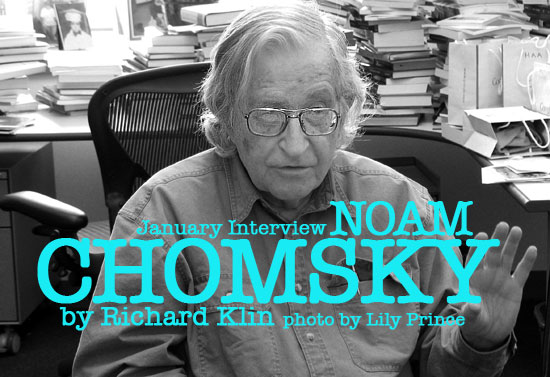
Writer and linguist Noam Chomsky (Making the Future, How the World Works), was born in Philadelphia on this day in 1928. From Writer’s Almanac:
He said, “We shouldn’t be looking for heroes, we should be looking for good ideas.”
January Magazine interviewed Chomsky in 2008. That interview is here.

Labels: ,

Wednesday, November 16, 2011

Diary of a Wimpy Kid: a Chat With Jeff Kinney

It was like a rock concert. A thousand kids, siblings, and parents, all gathered on sidewalks outside the Barnes & Noble in Cherry Hill, New Jersey. Outside, even on this warm night, a pile of snow, with fake snowflakes sprayed by a special machine, and a massive luxury bus decorated with Wimpy Kid art on all sides. And at four o’clock sharp, the rock star emerges from it: Jeff Kinney, author of the bestselling Diary of a Wimpy Kid series. The crowd goes wild. Then Jeff introduces two surprises: the lead actors from the two Wimpy Kid films released so far (a third is on the way), Zachary Gordon and Robert Capron.

Why is all this happening? Because the new book in the series, Diary of a Wimpy Kid: Cabin Fever (Amulet Books), hit stores on November 15, and Cherry Hills was the first stop on a multi-city tour.

My son Ian, 11, is perhaps Jeff Kinney’s biggest fan. When we got approved for a short interview with the author, Ian stepped up and took over.

Ian: What inspired you to write Diary of a Wimpy Kid?

Jeff: I would say that I was inspired by a failure of my own. I wanted to be a newspaper cartoonist, but I couldn’t break into the business, and so I started writing these books instead.

Ian: How much longer do you plan on doing Wimpy Kid?

Jeff: That’s a good question. I’m not sure. I think that every good piece of creativity, like a television show or a comic strip, has a life span. And it’s hard to figure out what that life span is, when you should walk away. And I think that might be between seven and ten books for me.

Ian: What’s your biggest achievement with Wimpy Kid?

Jeff: I think getting published at all, because it’s hard to get published. And I didn’t think I had a prayer, so the day that I got my book in the mail was just probably the best day of my life. I knew I had accomplished something pretty great.

And the book? Ian’s already read a good chunk. His verdict? It’s a quick, fun book that’s full of funny, smart jokes and stories that Jeff Kinney creates in the mind of Greg Heffley. Read it now! ◊

Tony Buchsbaum, a contributing editor of January Magazine and Blue Coupe, lives in central New Jersey with his wife and sons. These days, he is writing his second novel. Again.

Labels: , ,

Sunday, October 16, 2011

Ian Rankin on Battling the Blank Page

As The Impossible Dead, Ian Rankin’s 31st novel is about to be released, the author who put the Tartan in Noir talks to The Independent about process, production and the deadly fear of staring at the blank page.
“No matter how many awards you’ve won or how many sales you’ve got, come the next book it’s still a blank sheet of paper and you’re still panicking like hell that you’ve got nothing new to say,” he admits. “I still panic that the ideas aren’t going to come, it’s not going to be as good as my previous book, I’ve got nothing new to say, people are fed up with me, younger writers are doing better work. There are all kinds of fears that keep pushing at you. Thank God, otherwise you’d just sit back and write any old crap.”
And it certainly doesn’t seem as though the second book to feature Rankin’s creation Malcolm Fox would fit that description. Again from The Independent:
The action in The Impossible Dead is set mostly in Fife, the region just over the Forth Bridge from Edinburgh, and the place where Rankin himself grew up. Like all Rankin's work, it's impeccably plotted, and what seems like a simple case of police corruption gradually spreads its tendrils back to the mid-Eighties, a period of recent history involving a brief outbreak of Scottish nationalist terrorism. It's loosely based on the real-life story of Willie MacRae, an SNP activist with alleged links to extremists, who was found dead in his car one night in suspicious circumstances. This linking of past and present is a familiar theme in Rankin’s work, something that gives it a depth and resonance sometimes lacking in rival crime fiction.
The Independent points out that though Rankin is an international bestselling author now, he was anything but an overnight sensation:
It’s hard to picture these days, but there was a time when Rankin’s name wasn’t ubiquitous at the top of the bestseller list. In fact, Rankin didn't have any kind of breakthrough until the eighth Rebus novel (and his 15th book in all), Black and Blue, won the Macallan Gold Dagger for fiction in 1997. And even then he didn't have a bestseller until two years later, with Dead Souls.

“My publishers were taking a punt on me for a long time,” he says. “That probably wouldn’t happen now. I was having panic attacks, I was driving through the French countryside where we lived at the time, screaming at the top of my voice just to get it out my system. I was waking up in the night with this adrenalin rush like a heart attack. It was a pretty horrible time.”
And it was around the time that J. Kingston Pierce interviewed Rankin for January Magazine back in 2000. That interview is here. More recently, Pierce selected Rankin’s new novel as his pick of the week.

The Impossible Dead is out now in the UK and Canada and will be available in the US in November.

Labels: ,

Thursday, August 19, 2010

Interview: Justin Cronin

Today in January Magazine, contributing editor Tony Buchsbaum interviews Justin Cronin, author of the post-apocalyptic bestseller, The Passage.

Among other things, Cronin discusses how his life has changed since The Passage was published. These days, Cronin reports, he’s working harder than ever:
“Now I treat every day like a workday. I start work around nine o’clock in the morning, and I work until three, when the kids get home, and then I’ll do a second shift basically after everybody goes to bed. Somewhere between nine or ten I’ll go back out to the office until midnight or one. And the deeper you are in a book, the longer and weirder the hours get. So by the time I was finishing the book and doing the last draft of the book, I was the last man awake in Houston, Texas. I’ve always had to work around the fact that I have kids, and I work at home, so that’s the unmovable fact of my life. The nightowl thing suits me. There are other writers who get up at four or five in the morning and try to get most of their workday done by noon, and I’m not that guy, my rhythms aren’t like that.”
Read the full interview here.

Labels: ,

Saturday, April 03, 2010

Philip Kerr at The Rap Sheet

Today at The Rap Sheet, J. Kingston Pierce offers up an in-depth interview with Scottish crime fictionist, Philip Kerr (If the Dead Rise Not, A Quiet Flame).

Pierce opens with this charming story, but wastes no time in getting down to business:
No matter how many authors I interview in my life, I may never escape the jitters I feel whenever I start talking with somebody whose writing I admire. That anxiety hit me hard last October, during a trans-Atlantic telephone call with critic and Rap Sheet correspondent Ali Karim in London. He’d just informed me that Scottish novelist Philip Kerr, author of the Bernie Gunther crime series, had been named the 2009 recipient of the prestigious Ellis Peters Historical Award, given to him that night during a special reception in the British capital. In response, I casually told Karim that, if he happened to see Kerr amid the crowd of champagne-swilling celebrants, he should pass along my congratulations. “Well,” Karim said excitedly, “why don’t you tell him yourself?” And with that, my correspondent walked over to Philip Kerr -- and handed him his cell phone.
The interview is in-depth and available in full right here.

Labels: , , ,

Friday, September 11, 2009

Interview: Thomas H. Cook

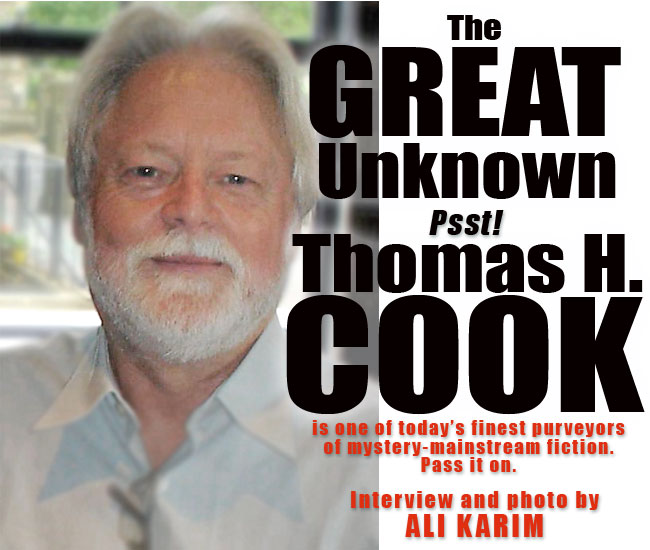
Today in January Magazine, contributing editor Ali Karim interviews Thomas H. Cook, author of The Fate of Katherine Carr and a writer who just might be the best known author you’ve never heard of.

“You like puzzling out the solutions to mysteries?” asks Karim. “Then tackle this one: why isn’t American Thomas H. Cook one of the world’s biggest-selling authors? He’s prolific, with more than two dozen crime and suspense novels to his credit, plus non-fiction books and anthologies he has edited. He won an Edgar Award for his 1996 novel, The Chatham School Affair, and 2005’s devastating Red Leaves was nominated for an Edgar, a Crime Writer’s Association Dagger Award, an Anthony Award, a Barry Award and Sweden’s Martin Beck Award.”

Read Karim’s interview with Cook here.

Labels: ,

Tuesday, August 25, 2009

Author Snapshot: Philippa Gregory

Six novels after she swept us away with The Other Boleyn Girl, Philippa Gregory brings us The White Queen and the magnificent Plantagenet family.

In some regards, The White Queen isn’t new territory for Gregory, whose 14 previous novels have covered a broad swathe of history but are nonetheless bound by their author’s tight attention to detail.

In a CBC interview around the time the film version of The Other Boleyn Girl was released, Gregory said that “It gives me a real authority to talk about the period. There’s nobody going to say to me, ‘Did you know such and such?’ and I won’t know it. The pleasure for me, then, is that I can then relax and write the novel. I don’t start writing the novel until I am as confident of the historical record as if I was going to sit down and write a biography.”

One can imagine, then, the place where the research ends and the magic begins. Research will take you a long way, sure. But Gregory’s powers as a storyteller are what has entranced so many millions of fans over the years. Some of those fans will get the chance to hear Gregory up close and personal as she tours in support of The White Queen. In Canada, Gregory will be in Toronto on September 17th and in Victoria on September 28th. Event details and US tour dates are here.


A Snapshot of... Philippa Gregory

Most recent book: The White Queen
Born: Kenya
Reside: Yorkshire, United Kingdom
Birthday January 9, 1954
Web site: PhilippaGregory.com


What’s your favorite city?
London.

You only have six hours to spend there. What do you do?

I get my hair cut, I go to the National Portrait Gallery and see the original paintings of the faces that I now know so well. I go to the London Library and read, I end up in the Berkley Hotel for the night.

What’s on your nightstand?
At the moment [The] Biophilia [Hypothesis] by Edward O. Wilson, and The Kingmaker’s Sisters, by David Baldwin.

What inspires you?

The history and the gaps in the history.

What are you working on now?
I am working on book two of the Cousins War series which will be about Margaret Beaufort, mother to Henry Tudor, and titled The Red Queen. I hope it will come out next year.

Tell us about your process.
I write on a laptop wherever I happen to be, I don’t need silence or study conditions, I write in airports and in my bed. I follow the historical record exactly wherever it is certain, and see my work as in a sense recreating the events that we know took place. When there is a gap in the record -- as happens so often especially for women's history -- I write the most likely, the most congruent with the facts we know, or the one that makes sense to me.

Lift your head and look around. What do you see?
I am in my study overlooking the North York Moors so I see a great side of hill with some trees, some craggy outcrops of rock and a big expanse of cloudy grey sky.

When did you know you wanted to be a writer?

I never really wanted to be a writer, I wrote little stories from early childhood, but I did not know I would make my living from writing fiction until my first book was accepted by a publisher. Even then, I thought I would do it alongside my chosen profession of teaching history. But the history post never came up, and the next book did.

If you couldn’t write books, what would you be doing?
There are so many things I would love to do. My first love was journalism and I would love to work in radio still. I would like to teach history in a university, I would like to run a conservation sanctuary in Africa, or train horses, or run an orphanage, or be a lady of complete leisure in a big house in the country...

To date, what moment in your career has made you happiest?
I get a lot of pleasure when I have finished a book and I feel that it is as good as it can be. The Boleyn Inheritance was a very easy book to write; The Queen’s Fool, and The Constant Princess were very interesting to research and write too. I think The White Queen may be my best book and it has been endlessly fascinating to me.

For you, what is the easiest thing about being writer?
The hours and the work conditions -- just as I want.

What’s the most difficult?
I can’t honestly say anything is difficult. Sometimes the interviews are uncomfortable.

What question do you get asked about your writing most often?

Where do you get your ideas from.

What’s the question you'd like to be asked?

I like to be asked complicated questions about history by people who are genuinely interested.

Please tell us about The White Queen.
It is the story of Elizabeth Woodville whose beauty, and (according to accusations at the time) witchcraft skills seduced the 20 year old King Edward IV into marriage. An attack by the rival House of Lancaster forced him to run for his life into exile and her into hiding in sanctuary in Westminster Abbey while his cousin, Henry VI recovered the throne. But Edward’s military brilliance meant that he returned to England, recaptured the throne, in two successive set piece battles, and rescued his wife from sanctuary where she had given birth to their first son. The royal couple had ten surviving children before the King’s death when Elizabeth decided to secure the safety of her thirteen year old son by seizing power. The king’s brother, Duke Richard of York, suspecting foul play from the newly widowed queen, captured her precious son. The boy was lodged in the Tower and Elizabeth again fled into sanctuary with her remaining children -- her younger son, Richard, and her daughters.

The conventional history (commissioned by the Tudor victors) says that she handed over her children to Richard III who was Richard Duke of Gloucester. I don’t believe it. I think she smuggled him out of the country into Flanders, in the care of his aunt, the Duchess of Burgundy. Many historians agree that one of the princes may have got to safety, but we have no evidence to show it was done, nor how it was done.

In The White Queen I suggest that she sent a changeling into the Tower in her son’s place. Elizabeth survived the reign of Richard III and clearly became friends with him, releasing her daughters into his safe-keeping while she went to live in the country. The novel ends on the eve of the battle of Bosworth with Elizabeth certain that her hidden son Richard, will be the York heir.

Labels: , ,

Wednesday, July 15, 2009

Author Snapshot: Jennifer Weiner

Though Jennifer Weiner might wriggle under the appellation, if chick-lit has a champion purveyor, she looks like this: gentle eyes, calm of disposition, with a razor-sharp understanding of everything she observes.

Weiner’s books have been judged alternately empty and insipid and fully engaged with the pulse of contemporary American womanhood. Whatever busloads of critics might have said since the publication of Weiner’s debut novel, 2001’s Good in Bed, a lot of people would probably vote for the latter. Over 11 million copies of Weiner’s books are in print in 36 different countries. Her second novel, 2002’s In Her Shoes, was turned into a movie with Toni Collette and Cameron Diaz. The author was actually in one scene of the film.

Weiner’s latest book, Best Friends Forever (Simon & Schuster), explores the impact of love, desire and familial loss on a friendship between two young women. “Former mousy types, rejoice!” writes People. “In Weiner’s delicious latest, a popular girl hits trouble long after high school and only the geeky pal she once shunned can help.”

If you can’t get enough Jennifer, you need not despair. The author signed a development deal with ABC Studios last year. She says she’s working with “many fine writers to come up with comedies and dramas that feature my kind of characters and humor (i.e., smart, snarky, soulful, possibly larger than the average leading lady).”

A Snapshot of... Jennifer Weiner

Most recent book: Best Friends Forever (Simon & Schuster)
Born: DeRidder, Louisiana
Reside: Philadelphia
Birthday: March 28
Web site: www.jenniferweiner.com


What's your favorite city?
I love Philadelphia, but I always love visiting San Francisco.

You only have six hours to spend there. What do you do?
Go to Yank Sing for dim sum. Go to the Ferry Building farmer’s market for flowers and bread, and the Cowgirl Creamery for cheeses. Walk across the Golden Gate Bridge to build up an appetite. Take the cable car back to the Fairmont Hotel, and have wine, and cheese, and a nap.

What food do you love?
What food don’t I love? I'm a big fan of staples, cooked well: a good roast chicken and mashed potatoes, rib roast, grilled fresh vegetables

What food have you vowed never to touch again?
Oh, there’s nothing I won’t eat again -- I’m all about second chances -- but I just had a bad run-in with macadamia nuts and sake, so I probably won’t be mixing those two again.

What’s on your nightstand?
About 30 books that I’m either reading or re-reading: Kate Christensen’s Trouble, Julie Metz’s Perfection and Stephen King’s The Drawing of the Three.

What inspires you?
Real life; my family and my friends. My daughters are both very funny.

What are you working on now?
I’m in the early stages of a novel about three different women -- young, middle-aged and old -- who find themselves thrown together, in the wake of various personal crises, in a big old house on the beach in Connecticut and I'm starting to gather the pieces for a potential non-fiction piece, which would be a big change for me.

Tell us about your process.
My process is necessarily dictated by my kids, and the ensuing lack of time. Most of my work happens in the afternoons (when I have a sitter), on a laptop, in a coffee shop, where the kids can't find me. I really need to leave the house in order to get any serious work done, and I try, as best I can, to replicate the atmosphere of a newsroom when I find a workspace -- I like a little hustle and bustle, and music and conversation, not to mention latte and scones.

But really, I'm working all the time -- there’s always a part of my brain that's thinking about the work in progress, whether I’m at the park, pushing my baby in a swing, or in the minivan, waiting to pick up my big girl from school.

Lift your head and look around. What do you see?
I’m working at my kitchen table, so ... a stack of bills I’m about halfway through paying. A bag from Target filled with sunscreen and sippy cups and Season 2 of Arrested Development that I need to unload.

When did you know you wanted to be a writer?
I think as soon as I learned how to read. I remember being six, and my first-grade teacher Mrs. Palen giving me extra paper and letting me stay in for recess so I could keep writing a story.

If you couldn't write books, what would you be doing?
Hmm. Not sure that newspaper gig would have worked out, long-term. I
probably would have gotten a PhD in something and taught.

To date, what moment in your career has made you happiest?
The day I got to go home and tell my mother that Simon & Schuster was
publishing my book. The joy only lasted a few seconds. Then I had to tell
her what the title was.

For you, what is the easiest thing about being writer?
Writing has always been the thing that I love best and came most easily to me. I love just about everything about the work I do.

What's the most difficult?
The business of publishing: dealing with marketing and promotion and knowing that, as far as some reviewers are concerned, whatever I've written is just a big spun-sugar pink nothing.

What question do you get asked about your writing most often?
“Where do you get your ideas?” “What time of day do you write?” “Longhand or
laptop?”

What’s the question you'd like to be asked?
Nobody’s ever asked about all of the water imagery and swimming in my books. That would be fun to talk about.

What question would like never to be asked again?
“How do you feel about your books being called chick lit?” Not great. Next question!

Please tell us about your most recent book.
Best Friends Forever is the story of two girls who are best friends all through high school, then have a tragic break-up, and reunite on the eve of the 15th reunion, after the glamorous friend who skipped town does something terrible, and shows up on the doorstep of her mousy homebody ex-best-friend, saying that she's the only one who can help.

Tell us something about yourself that no one knows.

Is this really the time to mention the third nipple?

Labels: , ,

Friday, June 26, 2009

Author Snapshot: Clea Simon

We engage with the work of the authors we love on many levels. In the case of fiction, that engagement is often about a careful blend of passion and voice. In non-fiction, it seems to me it’s about heart and sincere understanding of the material under study. It’s why the authors who excel at both fiction and non are rare. Those four things -- passion, skill, heart and research -- are unlikely to surface in a single person. When it does crop up, more often than not, the writer in question is a journalist.

Clea Simon is not the exception to the rule. A respected journalist whose credits include The New York Times, The Boston Globe, Rolling Stone, Ms. and Salon, Simon wrote three critically acclaimed works of non-fiction before penning her first novel, 2005’s Mew is for Murder, the first in a series of popular mysteries featuring Boston rock journalist, Theda Krakow and her well loved cat, Musetta. The fourth book in the series, Probable Claws (Poisoned Pen Press), was published in April. Despite the punny titles and the strong cat connections, Simon points out that the cats in her books don’t talk. In fact, Simon has referred to the books featuring Theda and Musetta as “kitty noir,” something she says with a smile but is only half-joking about. And she’s right: there is a whiff of the darkness at the edges of the tales she’s chosen to tell here. Murder, mystery and music via the Boston club scene that Simon herself knows very well. A strong core of animal rights and welfare run through Simon’s books, though never in a self-righteous way. Readers knowledgeable about animal protection issues will find themselves nodding in agreement, those who aren’t will find knowledge shared in an interesting way.

Mystery, music, nightclubs, animals in danger: on a certain level, it’s an unlikely combination, yet, somehow, it works very well. And why? That special blend, I think: passion, heart, understanding and voice, voice, voice. Simon’s is as strong and clear as the passion she brings to the stories she tells.


A snapshot of... Clea Simon
Most recent book: Probable Claws
Born: East Meadow, NY
Reside: Cambridge, MA
Birthday: July 27 (I’m a Leo!)
Web site: www.cleasimon.com


What’s your favorite city?
Well, I adore Cambridge, where I live, but I’d have to say New Orleans. Not sure I could live there, but I need regular fixes, for sure.

You only have six hours to spend there. What do you do?
Eat oysters at Acme, browse the “early novel” shelves at Beckham’s Books (where I have found many wonderful, sentimental turn-of-the-20th century finds), stop in at Louisiana Music Factory, and then head out to Tipitina’s, where through some marvelous happenstance Rebirth is opening for, oh, let’s say Dr. John. If there’s any time left, I’d end up at Coop’s or Clover Grill before the celestial ride home.

What food do you love?
Easier to say what I don’t... um, all seafood? Pheasant, quail, and andouille gumbo? Spicy boiled crawfish? (Can you tell I’m recently back from the New Orleans Jazz and Heritage Fest?)

What food have you vowed never to touch again?
The pre-cooked crawfish that a dear friend had shipped to me as a present. Very well intentioned. Very scary.

What’s on your nightstand?
Lens cleaner, a glowing squirt frog to squirt water at the cat when she gets rambunctious at four a.m. (the fact that it’s a glowing squirt frog helps), the books from the pile up the side of the nightstand that are leaning onto it for support. Clock radio set on the local college station.

What inspires you?
Talking with friends about making art (music, painting, writing).

What are you working on now?
I have just sent the sequel to Shades of Grey off to my agent. I’m sure she’ll suggest more revisions before we send it to my editor, but right now, I’m catching up on a lot of freelance and other things that had been pushed aside. Shades of Grey is the first in a new series, slightly paranormal, that Severn House will publish in September, but the sequel, tentatively titled “Grey Matters,” is due on May 31. It’s very odd to be finishing up the sequel before having any real-world feedback on the first book, but I’m grateful for Severn’s interest! At some point, I want to start revising my tongue-in-cheek pet noir, find a publisher for that...

Tell us about your process, please.
Although I try to write mornings, these days I find myself needing to get the money work (editing, mostly) done first and the creative stuff really kicks in mid-afternoon. I usually write to a word count (i.e., 1,000 words a day), five days a week. And although I have a basic idea of the book’s direction and a white board with sticky notes all over it of ideas I’ve had that often make little sense within 24 hours (such as “He has green eyes!” Or “Lloyd shows up at Bullock’s”) I tend to need to write the book out, then revise it to make sense.

Lift your head and look around. What do you see?
My iPod recharging, my various cat fetishes. A wilting daffodil and the cereal bowl from my breakfast.

When did you know you wanted to be a writer?
I always knew that’s what I wanted. It just took a few years (as a journalist, an editor and in various other publishing jobs) before I realized it was feasible.

If you couldn’t write books, what would you be doing?
Pulling my hair out? I don’t know. Probably just cooking a lot more, or maybe studying zoology. I always wanted to be a herpetologist. But that’s because I love frogs and toads. I hated having to dissect them.

To date, what moment in your career has made you happiest?
This one changes. But I still have saved, on my answering machine, my agent singing “It’s beginning to look a lot like Christmas...” from December, when we got the Severn House offer.

For you, what is the easiest thing about being writer?
The dress code. Right now, I’m wearing sweats and big fuzzy socks. Several years ago, I gave away all the suits I had from my days working as a magazine editor.

What’s the most difficult?
The waiting. I don’t even mind the rejections so much as the waiting. When someone rejects something, you can revise it and send it out again. But not knowing? The worst.

What question do you get asked about your writing most often?
Where do I get my ideas? To which I don’t have a good answer. Also, if my heroines are me. To which I can only say, all my characters are part of me.

What’s the question you’d like to be asked?
I’d like to be asked about specific plot or character developments in the book -- why did this character do that? More generally, how do your stories/characters develop?

What question would like never to be asked again?
“Why don’t you send a copy to Oprah?”

Please tell us about Probable Claws.
It’s the fourth, and I suspect maybe the last, Theda Krakow mystery. Theda has reached a turning point in her life. Her friends’ lives have all changed: Bill, her boyfriend, has retired from the police and is managing a jazz club, a job that takes a lot of his time. Bunny is about to become a mother. Violet is fully ensconced in her own relationship and her shelter work. The newspaper business is changing. Theda has to figure out where she stands in this new world, and there are no easy answers. It’s funny, because my editor thought it should be obvious that the next step for Theda is to get married. I don’t think it’s obvious. I think that things cannot stay the way they have, but that she has legitimate concerns and interests pushing her various ways.

This is all set against a backdrop of a very real, and possibly unresolvable conflict in animal welfare: the issue of euthanasia. Nobody wants to kill healthy animals, but there are too many cats, dogs, etc., for shelters to care for. So lots of places are trying innovative campaigns to reduce the necessity of euthanasia -- better matching people and pets, fostering animals, etc. -- but it’s an asymptotic approach to the absolute of eliminating the practice. And there is a lot of tension between shelters with different philosophies, a tension ratcheted up by the struggle for funds. Well, it seems perfectly reasonable to me that in this conflict, you might have a murder. A “no kill” murder, if you will.

Because, oh yeah, there’s also a murder!

Tell us something about yourself that no one knows.
I was about to type, “I’m very lazy at heart and only write out of fear of deadline.” But a lot of people know that. So, um, I’ll have to come up with something else. But then I’d have to kill you.

Labels: , , ,

Tuesday, June 09, 2009

Author Snapshot: Denise Dietz

You don’t see her without a smile. That’s not a surprise. People who have read her books suspect that the author, too, will be humor-filled, that she will be wicked smart and that the smallest of her comments will drip with a good-humored wit. In person, Denise Dietz, author of the Ellie Bernstein Diet Club mysteries is all of these things, and more.

Though Strangle A Loaf of Italian Bread (Five Star) is Dietz’s 14th novel, it is the fourth to feature diet club leader Ellie Bernstein who has replaced her eating habit with one for solving mysteries.

“Denise Dietz is like Robert B. Parker on estrogen,” author Marshall Karp has written. “Her heroine, diet guru Ellie Bernstein, is fiendishly clever, blatantly sexy, and uproariously funny. Trust me, ladies, this is not your maiden auntie’s murder mystery.”

Dietz lives on Vancouver Island off Canada’s westernmost coast with her husband, novelist Gordon Aalborg. Like most of Dietz’s work, her current novel in progress sounds deliciously funny. Called Gypsy Rose Lieberman, the books stars “a Vaudeville ghost who was -- oops! -- sawed in half by her magician husband.”

Dietz’s fans are likely already laughing in anticipation.


A Snapshot of... Denise Dietz
Most recent book: Strangle A Loaf of Italian Bread (Five Star)
Born: Manhattan, New York
Resides: Vancouver Island, British Columbia
Birthday: January 29
Web site: www.denisedietz.com


What’s your favorite city?
Colorado Springs, Colorado. I chose to live in Colorado, inspired by Ayn Rand’s Atlas Shrugged, which I “borrowed” from my mom’s bookshelf when I was a kid. I don’t agree with Rand’s ideology, but she’s one heck of a wordsmith!

You only have six hours to spend there. What do you do?
Only six hours? Inhale and absorb the scenery, especially Garden of the Gods, say hi to the librarians at the Penrose Library, and browse my favorite thrift/consignment shops.

What food do you love?
A perfect meal would be raw oysters, prawns and lobster, and New York cheesecake.

What food have you vowed never to touch again?
Cottage cheese.

What’s on your nightstand?
Potpourri. I’m rarely sick, knock on wood, but when I get the flu, my nightstand holds a copy of Stephen King’s The Stand. When I read The Stand I feel much better.

What inspires you?
Change the question to “who” and my answer is readers. I once had a long wait at the DFW airport and started chatting with a young woman. When I told her I was an author, she said, “Have I ever heard of you?” Exhausted, I merely said, “I doubt it.” She wanted to know my name. I said “Denise Dietz” and she said, “OMG, Beat Up a Cookie! I loved that book! My dad loved it, too.” That happened more than 10 years ago and it still inspires me. Another, more recent inspiration is Susan Boyle.

What are you working on now?
Gypsy Rose Lieberman, starring a Vaudeville ghost who was -- oops! -- sawed in half by her magician husband. I’m also writing the second book in my Sydney St. Charles apothecary series. Title: Toe of Frog. Working title: “The Da Vinci Toad.”

Lift your head and look around. What do you see?
A huge, framed poster of Daniel Day Lewis in The Last of the Mohicans, a photo of my husband, novelist Gordon Aalborg (Dining with Devils), and a stuffed “deadline” vulture named Michael Seidman.

When did you know you wanted to be a writer?
When I wrote a story for my high school magazine called “Is the Bronx Zoo in Brooklyn?” and it made everyone laugh. That was cool. In my second story, “Red Corduroy,” I killed a dog. Everyone wept buckets, including me, but I’d never kill a dog, or a cat, today, I swear, Girl Scout’s honor, cross my heart...

If you couldn’t write books, what would you be doing?
I can’t imagine not writing books, but I suppose I’d be looking for singing gigs. In my next life I want to be a stand-up comedian. Or the first woman to win racing’s Triple Crown.

To date, what moment in your career has made you happiest?
Seeing my first published book -- Throw Darts at a Cheesecake -- in the library. It was shelved with the new books. I ran up and down the aisles and shouted, “Come! Come! Come!” over and over. Several people followed me and when I reached the shelf, I pointed to the book and said, “Me! Me! Me!”

For you, what is the easiest thing about being a writer?
To be perfectly honest, I don’t find writing easy. It’s gobsmackingly gratifying -- especially when you hit page 170 and realize there was a good reason for the three wonky paragraphs you wrote on page 30 -- but it takes an incredible amount of self-discipline. That’s why, when people say “Someday I’m gonna write a book,” I try to stifle my snort.

What’s the most difficult?
Waiting for reviews! You send your “baby” out into the world and hope someone doesn’t say, “What an ugly baby!” I’ve been lucky with starred reviews for The Landlord’s Black-Eyed Daughter (written as Mary Ellen Dennis) and rave reviews for Footprints in the Butter and Fifty Cents for Your Soul. However, I’ll always remember a lazy reviewer who, obviously, hadn’t read my book. She compared me to Diane Mott Davidson: Colorado locale, 40-ish sleuth, food title, and then wrote: “So I suggest you buy a Diane Mott Davidson book, instead.” Diane is a fellow Coloradoan and a friend, but our “voices” are very different. Before I could vent my ire, I discovered that my sales had spiked. It seems the only thing people remembered was the comparison to Diane.

What question do you get asked about your writing most often?
It’s a toss-up between “How long does it take you to write a book?” and “Have I ever heard of you?”

What’s the question you’d like to be asked?
“Would you be our Toastmistress at Left Coast Crime (or Bouchercon or Malice)?”

What question would you like never to be asked again?
“My life would make a great book, will you write it?” To that end, an attorney once asked me to ghost-write his John Grisham rip-off. He offered me 50 per cent of his royalties.

Please tell us about Strangle a Loaf of Italian Bread.
The title is from a quote by the late, great Gilda Radner. She said: “Eating is self-punishment; punish the food instead. Strangle a loaf of Italian bread. Throw darts at a cheesecake. Chain a lamb chop to the bed. Beat up a cookie.”

Sara Lee, a waitress at Uncle Vinnie’s Gourmet Italian Restaurant, plans to try out for the John Denver Community Theatre’s production of Hello, Dolly! Before she can, she’s strangled with a Daffy Duck necktie and trashed in her restaurant’s Dumpster.

Diet club leader and mystery maven Ellie Bernstein wants to know why everybody didn’t like Sara Lee. At the same time, Ellie -- who has never owned a dog -- is dog-sitting a diet club member’s Border collie and coping with her cat, Jackie Robinson’s reaction to the canine guest. Then Ellie discovers that the dog’s owner has disappeared into thin air.

Eventually, Ellie’s search for Sara Lee’s killer lands her at the Hello, Dolly! auditions. Only problem is, Ellie can’t sing or dance.

This is the fourth book in the series but, like all of my books, it stands alone.

Tell us something about yourself that no one knows.
My life is an open book (hee!) But very few people know that I sang on a cruse ship with a British rock and roll band. Our most popular song was “Happy Anniversary, Mr. and Mrs. Abramowitz...”

Labels: , , ,

Friday, April 17, 2009

Author Snapshot: Kamran Pasha

Some people -- critics and supporters alike -- are watching the debut of Kamran Pasha’s Mother of the Believers (Washington Square Press) with deep political interest. Viewed a certain way, so much is at stake. Recently, on his blog, Pasha wrote that “controversy is inevitable when it comes to writing about Prophet Muhammad, who has the distinction of being simultaneously the most beloved and hated man in world history. Revered by his followers as God’s last messenger to humanity, and vilified by others as a false prophet, the founder of Islam has always been a figure that excites passionate emotions. So in writing a novel that looks at his life from the perspective of the woman he loved most, I have no doubt that I will become the target of those feelings.”

There’s more of that kind of thing swirling around Pasha’s novel. Doubtless, none of that will be bad for sales, which just a few days after the book’s publication date already look quite brisk. But, right here and now, none of that matters. What does matter: Mother of the Believers is a fascinating and beautifully crafted work of historical fiction. Set in Arabia in the seventh century, it is the story of Aisha, the favorite of the Prophet. Aisha tells his story with sharp and affectionate eyes. “I have been blessed -- and cursed -- with perfect memory,” Aisha tells us early in the book. “I can recall words said forty years ago as if they had been uttered this morning .... The Messenger ... used to say that I was chosen for that reason. That his words and deeds would be remembered for all time through me, the one he loved the most.”

As far as narrative devices go, having a beloved mate tell the story from her eyes is not a bad one. It gives her license to indulge her poetic heart and gives the author space in which to cloud his imaginings.

Mother of the Believers works on all levels. A deeply entertaining fiction -- nice and thick, just the way those of us who love historicals like ‘em -- as well as a bridge to understanding a way of thought and life that will be at least somewhat foreign to many of the book’s readers. Has there ever been a better time for both of those things?


A Snapshot of Kamran Pasha...
Debut novel: Mother of the Believers
Born: Karachi, Pakistan
Reside: Los Angeles
Web site: kamranpasha.com


What’s your favorite city?
Medina, Saudi Arabia.

You only have six hours to spend there. What do you do?
Go to the Tomb of Prophet Muhammad. Pray. Meditate. Go to the neighboring cemetery, Jannat al-Baqi, and visit the grave of my novel’s heroine, Aisha, the Prophet’s wife. Medina is the most peaceful city I have ever known. Six hours inside its sacred precincts would feel like both an eternity and a blink of the eye.

What food do you love?
Spinach. I have been addicted to spinach since I was a child. Sautéed or cooked in curry sauce, I could eat spinach for every meal!

What’s on your nightstand?
A copy of Steven Pressfield’s The War of Art. This is one of the most important books for any writer -- in fact, any artist. It explores why we procrastinate as artists, why put off doing what we love, and inspires the reader to overcome his or her blocks and live a creative life.

What inspires you?
Women and words. I have a work of art that hangs over my writing desk, symbolizing my two sources of inspiration. It is a black-and-white photograph of a beautiful woman wrapped in a veil of cursive script. The beauty of women and the power of words -- they are inextricably linked in my heart. Perhaps that is why I primarily tend to write about strong women, and why my first novel is told from a woman’s point of view. The Sufi mystics of Islam teach that the beauty of God is manifest in the feminine form, and my fascination with women has very deep spiritual roots. It is the never-ending quest to probe the depths of the female psyche, to explore the mysteries of the divine feminine, that keeps me creatively inspired.

What are you working on now?

My second novel, Shadow of the Swords. The book will follow the battle between Richard the Lionheart and the Muslim king Saladin to conquer Jerusalem -- and the heart of a beautiful woman.

Tell us about your process.
I am a night owl and normally don’t start writing until 10 PM, and then work until 2 AM in the morning. I am a screenwriter and I usually write a screenplay version of my novel first as an outline. With the dialogue and action already written in the screenplay, I turn to descriptive prose and shape the story into a novel.

When did you know you wanted to be a writer?
I can’t remember anytime that I wasn’t a writer. One does not choose to be a writer. In fact, I would say most writers don’t “want” to be writers. That’s just who we are, we can’t help it. We may in fact hate the compulsion to write, since it takes us out of the social world and locks us into a private -- and sometimes lonely -- place.

There are times when I wish that I had some other passion, as writing is an exhausting process, both physically and emotionally. But words have power over me, and no matter how much I may want to resist, they summon me back to my writing desk. In Islam, creation comes from God using words. He says, “Be” and it is. It is therefore the power of the word that connects us back to our source, the ultimate creative force that imagined the universe into being. Words give me the fuel to live, to breathe. I cannot imagine doing anything else. Being a writer is more than a job. It is the essence of my soul.

If you couldn’t write books, what would you be doing?

I would be planted six feet under the earth. Writing is life. If I could not write, I would be like a plant denied water and sunlight. I would wither away and disappear.

To date, what moment in your career has made you happiest?
Securing my first book deal after spending nearly six years desperately trying to get agents and publishers to look at my manuscript. There is nothing as fulfilling as a victory that is long in the making.

For you, what is the easiest thing about being writer?
There is nothing easy about being a writer. I have no idea how I do it, nor perhaps why. Writing is very much like channeling spiritual energy. It feels like a force greater than myself takes possession of me and moves my hand across the computer keyboard. I often read over my words and am shocked, because I have no memory of having written them. That is usually true with my best writing. And as a result, I can’t really take credit for the best of my work. My conscious mind has nothing to do with the act of creation. Something deeper, something far more ingenious than my limited human mind, is doing the work. I’m just renting it the use of my hands.

What’s the most difficult?
Surrendering to that force, that muse, that is doing the creative work. My conscious mind is terrified of giving up control, and I will procrastinate for hours, days and weeks, before the internal pressure becomes too great and I force myself to sit at my computer and start typing. And the moment that happens, I go into a trance and lose myself in the process. My conscious mind checks out and the muse takes over. Writing is truly a form of possession, no less terrifying than Linda Blair’s experience in The Exorcist. If I had a choice, I would never allow that surrender of my mind to another power. But I don’t have a choice. I was made for this purpose, so I guess I have to just suck it up and deal.

Please tell us about Mother of the Believers.
My first novel is a historical fiction tale that follows the birth of Islam from the perspective of Aisha, the teenage wife of Prophet Muhammad. I was inspired by Anita Diamant’s wonderful book The Red Tent, which tells the biblical story of Jacob and his 12 sons, the forefathers of Israel, from the point of view of the women in their lives. I wanted to do a similar style novel within the Islamic tradition.

Aisha is such a remarkable figure in Islam that it was a tremendous pleasure to write about her. She was a scholar, a poet, a statesman and ultimately a warrior who led armies into Iraq. And at the same time, Aisha was the Prophet’s closest confidante and most beloved wife, and he died in her arms. Aisha single-handedly shatters every stereotype of subservient Muslim women, and I hope that my book will serve as a starting point for a much-needed dialogue about the role of women in Islam.

Tell us something about yourself that no one knows.
I have a crush on Audrina Partridge from the MTV series The Hills.

Labels: , ,

.