Saturday, May 10, 2014

New in Paperback: Blue Plate Special by Kate Christensen

PEN/Faulkner Award-winning author, Kate Christensen, delivers a stirring ands sometimes heartbreaking read in Blue Plate Special (Anchor).

Ostensibly a memoir about “the transformative nature of food,” Christensen’s first work of non-fiction is so much more than that. Despite the addition of a decent helping of interesting recipes, Blue Plate Special delves deeply into the psyche of a brilliant and complicated author. Perhaps even more deeply than Christensen initially intended or planned.

Christensen deals with her father’s violence, her own abuse by a high school teacher and her subsequent sexual confusion that was the result. Though this material is so moving -- and brilliantly handled -- it’s difficult to see beyond it when you look back, there truly is so much more, much of it viewed through an interesting lens of food.

The author was born in 1962, and so we travel with her through the 1970s, 80s and beyond, indulging, experiencing and even weeping with her through glorious meals and all types of experience.

Christensen demonstrates that she is not only a writer with a great deal to say, she says it so beautifully we don’t want the journey to end, even when it’s difficult to watch.

A note: there was an elegant postscript to the book in Elle magazine earlier this year where the author shares the resolution to the story of her sexual abuse. It’s a resolution that occurred after and because of the publication of the book. If you’re wondering if Blue Plate Special is a book you’d like to read, that article will convince you. As always, Christensen is stunning. ◊


Linda L. Richards is the editor of January Magazine and the author of several books.

Labels: , ,

Friday, December 03, 2010

Holiday Gift Guide: Let’s Bring Back by Lesley M.M. Blume

Huffington Post columnist Lesley M.M. Blume’s Let’s Bring Back (Chronicle Books) is an elegant, nostalgic look back at a time that perhaps never was.

Based on her column of the same name, Let’s Bring Back is “An Encyclopedia of Forgotten-Yet-Delightful, Chic, Useful, Curious, and Otherwise Commendable Things.” As Blume says in an introduction:

An encyclopedia of nostalgia, Let’s Bring Back celebrates hundreds of discarded and forgotten objects, pastimes, curiosities, recipes, words, architectural works, and personas ... from bygone eras that should be reintroduced today.
At home doctor visits. The Automat. Fern-Hunting Parties. Gold Teeth (“So festive. Also handy assets in a recession.”) Hotel living. Liveried footmen. Attention spans. Latin.

As you can glean just from this short list, only some of the things Blume writes about here are things that even could come back. Many of the things she lists are better fondly remembered than actually lived with.

Chimney sweeps. Phone numbers that include exchange names. Suitcase record players. Cigarette Girls. Bathtub gin stills. Hired mourners. Quills and ink.

And some of them don’t need bringing back at all because, in some places, they never left.

Dancing. Hobbies. Witch hazel. Mayonnaise. Maps. Discreet voices. Crumpets.

Though some of the things included are questionable, Blume’s style and wit are not. She has approached her project with the kind of grace that she celebrates with this enjoyable, sometimes whimsical book. Diana Vreeland would have been proud. ◊


Linda L. Richards is editor of January Magazine and the author of several books.

Labels: , ,

Monday, November 29, 2010

Biography The Hilliker Curse: My Pursuit of Women by James Ellroy

Today in January Magazine’s biography section, editor Linda L. Richards reviews The Hilliker Curse: My Pursuit of Women by James Ellroy. Says Richards:
The North American reviews I’ve seen of The Hilliker Curse have mostly been astonishingly lukewarm, at best. This has been a head-scratcher because if you actually read the book you see that the writing here is sterling. Prose-wise, the Demon Dog of American Literature has never been in better shape. Mind you, it’s memoir and, as many people know through Ellroy’s earlier work of autobiographical non-fiction, My Dark Places, this author’s own story rivals that of any of his fictions. But the nail on the coffin for North American reviewers is probably the subtitle: My Pursuit of Women. Before you even get warmed up, a lot of reviewers are going to be compelled to either comment negatively on the book or ignore it. These are the soft and squishy times to which we’ve come.
The full review is here.

Meanwhile, Ellroy fans should take note: the Demon Dog is getting his own television show. According to L.A. Observed, “James Ellroy’s LA: City of Demons debuts Jan. 19 on the Investigation Discovery channel. It will look at notorious L.A. crimes, of course.”

Labels: ,

Monday, September 27, 2010

Fiction: Freedom by Jonathan Franzen

Today in January Magazine’s fiction section, January editor Linda L. Richards reviews the much ballyhooed Freedom by Jonathan Franzen. Says Richards:
Jonathan Franzen’s Freedom begins with a deceptively narrow focus. The life of a single family -- the Berglunds of St. Paul, Minnsesota -- viewed from a distance. The neighborhood they choose. The house they buy and love. The children they grow in the house and how all four Berglunds fit into the neighborhood.

When the topic -- the vision -- seems nearly exhausted, the field narrows still further. Now we see things from Patty Berglund’s view. But we go back still further and see things in sharp relief and great detail. Her childhood -- the things that shaped her. Her college days. The athletics that gave her life meaning. The female stalker who unexpectedly provided her life with the form it will ultimately take. Her distant love of a moody musician. Her actual love of his roommate, Walter Berglund, and the life the couple eventually forge together. In a neighborhood. In a house.

And here, perhaps one third into
Freedom, it seems as though it will all either drone on endlessly or all begin again. At this point, Freedom seems to be teetering towards tedious. And then it goes somewhere else.
The full review is here.

Labels: ,

Friday, August 21, 2009

Art & Culture: Going Green edited by Laura Pritchett

Laura Pritchett’s bio tells us that, when she isn’t writing, “she’s Dumpster-diving to save what other people throw away.” So right away you know that Going Green: Tales from Gleaners, Scavengers and Dumpster Divers (University of Oklahoma Press) is not going to be an Eco Chic view of environmentalism.

In the preface, Pritchett explains the concept:
Gleaning junk from a beach leads to a discussion of the enormous amount of plastic waste in our oceans. Picking up a pair of pants from a gutter leads to a discussion of this country’s cotton industry. Finding a dead animal from the side of the road to eat leads to, well, raised eyebrows and a chuckle of admiration. Here are essays that not only explore the reusing but explore our culture at large.
I have no trouble admitting that my own ideas about environmentalism are probably closer to Eco Chic than Pritchett’s gleaning and I can’t imagine the set of circumstances that would have me diving into a Dumpster. Still, Pritchett’s collection manages to be thought-provoking. It’s yet another view of the green movement and the 24 voices here often seem raw and even primal: something remembered from wilder times (The 1970s, maybe?) when the world was less ordered and change wasn’t an option, it was a matter of course.

In the wonderful “Bin Diver” Christopher Buckley sums it all up:
Correct or incorrect as that might be, we have nonetheless, it seems clear, at least a responsibility to ourselves if not to those who follow us -- if not some perhaps spiritual obligation -- to recycle what little we can, to avoid wasting even the least bit given to us, in wealth or in relative poverty, to be resourceful stewards of the planet.

Labels: , ,

Wednesday, March 18, 2009

Non-Fiction: Twitter Power by Joel Comm

I’ve been successfully avoiding Twitter since I first heard about it a couple of years ago. I’ve been busy with my blog and my Facebook and my life, I really didn’t think I needed to add yet another thing. My single encounter with Twitter confirmed this early assessment. I’m a journalist and a novelist: I have a track record for going long. Being scintillating in 140 characters or less just didn’t appeal. I mean, it’s one thing to be concise: I’m all for that. But then there’s silly. And that’s where in my mind I stuffed Twitter.

And then 2009 happened and it seemed that suddenly even old men who shouldn’t know how to program their mobile phones are using their crackberries to tweet. So I start telling myself: OK. I’ll play with this. Get it working for me. But, you know the drill, life just keeps getting in the way.

After a couple of very productive weeks of procrastinating in the Twitter department, I caught a break: not one but two review copies of Twitter Power (Wiley) showed up in the January offices. And multiple review copies from various sources is a sign: it’s one of the ways we can tell if a book is getting some push. And, clearly, Twitter Power was one of those.

To be honest, most often, a book like this? I would have assigned it. But considering my Twitterless state and the fact that it was something I’d been thinking about, I started on the book myself and, within 24 hours of beginning to read, I’d set up two Twitter accounts -- one for myself and one for January -- and had additionally and quite easily done some fairly complicated footwork.

I love it when life conspires. Had Twitter Power been published a year ago, it would have been a useful book and probably held its own in sales, but that’s about it. But because this is the Twitter moment and Joel Comm chose this one to show up with this blazingly lucid book, he’s a star. The book is a bestseller and Comm is leaving a path of new tweeters in his wake.

Luckily, there’s more than timing at play here: Twitter Power is a good book. Comm (can that possibly be his real name?) is a social networking master, but he also has the depth of knowledge and the spiritual calm to explain all this stuff in a rational, logical way. And, of course, the book is published by Wiley, who have been producing excellent geek books for just about as long as there have been geek books to produce.

Now, honestly? I personally still do not love Twitter. I had an instant affinity for Facebook when I joined a couple of years ago, but Twitter still strikes me as a bit empty. The “micro” part of “microblogging” still leaves me a little cold. And “thumbtyping” is never going to be any fun for me. Maybe these are conditions I’ll grow out of. Meanwhile, I’m there and doing it and Twitter Power brought me there effortlessly. It’s a well thought out, friendly and entirely easy to follow book and it sounds considerably more sensible than the upcoming Twitter Wit, “a book of Twitter’s wittiest messages, edited by Nick Douglas and coming out Fall 2009 from HarperCollins.” As John McCain surely knows by now, you don’t have to be witty to tweet.

Labels: ,

Tuesday, January 20, 2009

Excerpt: Death Was in the Picture by Linda L. Richards

Today in January Magazine, an excerpt from Death Was in the Picture by Linda L. Richards.

In 1931, while most of Los Angeles is struggling to survive the Depression, the business of Hollywood is booming. And everyone wants a piece. The movies have always been cutthroat and, as girl Friday Kitty Pangborn is about to find out, that’s more than a metaphor.

Kitty’s boss, private detective Dexter Theroux, has been asked to help leading man Laird Wyndham prove his innocence. The actor was the last person to be seen with a young actress who died under very suspicious circumstances, and the star has fallen from the big screen to the big house. Wyndham’s a dreamboat, but that isn’t the only thing that has Kitty hot under the collar. Dex has already signed a client--one who’s hired him to prove Wyndham’s hands are not as clean as they look.

Mixing Hollywood glitz with hard-boiled grit, Death Was in the Picture captures the essence of life in Depression-era Los Angeles: a world where times are tough, talk is cheap, and murder is often just one scene away. Publishers Weekly says:
“Richards’s swell follow-up to Death Was the Other Woman … handles the slang and patois of the period neatly. Likewise, she paints a vivid picture of the contrast between those just scraping by during the Depression and those living high on the hog. Kitty has plenty of moxie, and while Dex gets top billing on the office door, she’s no second banana in this class act.”
January
has the excerpt here.

Labels: ,

Tuesday, August 12, 2008

Review: Missy by Chris Hannan

Today in January Magazine’s fiction section, Linda L. Richards looks at Missy by Chris Hannan. Says Richards:
The US edition of Missy, by award winning Scottish playwright Chris Hannan, is an object lesson in what to avoid when designing a book. A cheery chartreuse cover splashed in bright red with that single word title, at first glance, Missy looks like a classic example of contemporary children’s book design. In this instance, this is not a good thing.

The story of an opium-addicted prostitute making bad choices in the American west, Missy is about as far from being a book for kids as can be imagined.
The full review is here.

Labels: ,

Sunday, August 10, 2008

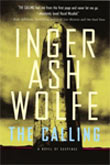
Review: The Calling by Inger Ash Wolfe

Today in January Magazine’s crime fiction section, Linda L. Richards looks at The Calling by Inger Ash Wolfe. Says Richards:
For this reader, a single thing marred the sharp perfection of the plotting and prose of The Calling. That was the secret identify of the literary superhero who penned the book.

Since publication -- heck, since prepublication -- it has been understood that The Calling was written under a pseudonym by “a well-known North American writer.” Since the book was announced in 2007, a lot of ink has been spilled over guesses as to the identity of this writer. To be honest, having now read The Calling, I feel as though I have a fairly good idea who the writer is. In my opinion, there are few authors with the talent and experience to create characters this vivid and then place them in a plot this engrossing and intense. And, by the way, if you’re hanging in to hear my guess, give it up: I’m not going there. I suppose that, at least for now, part of the experience of reading The Calling is this mystery within a mystery. Who wrote the book? Time will tell.
The full review is here.

Labels: ,

Thursday, July 10, 2008

Review: Bright Shiny Morning by James Frey

Today in January Magazine’s fiction section, editor Linda L. Richards reviews Bright Shiny Morning by James Frey. Says Richards:
Considering how he got here, it was inconceivable that James Frey’s first work of actual fiction not be brought to Earth on a wave of controversy. I myself came to Bright Shiny Morning fully prepared to loathe it. How could it be otherwise? Frey had gotten his shot with a couple of well-published and well-promoted biographies. He’d gotten his shot and blown it in a grand and noisy style. Shouldn’t Frey, in the tradition of historical wannabes everywhere, just go off with his tail between his legs and leave us alone on our various paths to finding books that matter?

But he did not. Instead, he took himself quietly off and emerged with a stout and ambitious book. Inevitably, fire was drawn.

Like many others, and with an admittedly jaundiced eye, I started to read. And was astonished. Bright Shiny Morning is not perfect. There are weirdly wide flaws. But it is utterly, completely original. More: the book’s flakey, broken narrative and bumper-to-bumper pace captures the feeling that is Los Angeles while its sharp little vignettes grab some of the context.
The full review is here.

Labels: ,

Tuesday, April 15, 2008

New This Month: The Toss of a Lemon by Padma Viswanathan

Padma Viswasathan’s debut novel is deceptively quiet and quietly brilliant. It pads in on little cat feet and rips you along. You don’t realize you’re on an epic journey in the midst of a generational saga until you’re well along and it’s far, far too late to turn back. Not that you’d want to. Not that you even could.

Inspired by the author’s own family history, we join Sivakami in a village in India in 1892, the year of her marriage to the healer, Hanumarathnam. She is ten.
She is neither tall nor short for her age, but she will not grow much more. Her shoulders are narrow but appear solid, as though the blades are fused to protect her heart from the back. She carries herself with attractive stiffness: her shoulders straight and always aligned. She looks capable of bearing great burdens, not as though born to a yoke but perhaps born with a yoke within her.
Sivakami is of the Brahmin caste as, of course, is her husband. And so when, as the astrologers forecast, her husband is dead by the time she is 18, leaving her with two young children to care for, she must take up the life of a widow, secluding herself most of the time, shaving her head and leaving the affluent and attractive young widow with a wardrobe of only two plain white saris and a future that will be seen mostly from within her own home. It’s the course her upbringing has set out for her and she doesn’t balk. She faces it squarely and begins to forge her way through the rest of her life.

Were you to only read these few lines, it would be possible to believe that this is the story of a woman’s oppression, but The Toss of A Lemon (Random House) is hardly that; never that. And is, in fact, so, so much more.

What astonishes here is Viswasathan’s virtuosity. In The Toss of A Lemon, we join India at a time of great social and political upheaval. Nevertheless, we experience this only at a distance. The way, in fact, Sivakami might experience it. Our concerns are more immediate, more domestic, though never more mundane. The marriage of a daughter, a granddaughter. The obedience of a son-in-law. The disturbingly progressive thoughts of a son. These concern Sivakami exclusively and, with her as our proxy, they are all that concern us, as well.

The Toss of A Lemon is astonishing. Brilliant. Beautiful. I learned a great deal about 20th century India that I did not know before. That’s secondary, of course. Like the very best novels, at its core, The Toss of A Lemon teaches us about ourselves.

Labels: ,

Sunday, March 30, 2008

Review: Shellfish: The Cookbook by Karen Barnaby

Today in January Magazine’s cookbook section, Linda L. Richards looks at Shellfish: The Cookbook by Karen Barnaby. Says Richards:
The title of Karen Barnaby’s ninth cookbook puts me in mind of the first time I encountered this chef’s food. It was my first visit to Vancouver’s Fish House in Stanley Park and it was deep in the 1990s. In retrospect, at the time Barnaby could only have been executive chef there for a couple, three years, at most. I ordered the cioppino, a special favorite of mine and one I’ve discovered is a good test of a chef whose work is new to you. It seems to me that a cioppino will show you something of a chef’s soul.

When my cioppino arrived that first night it took my breath away. For starters it was, quite simply, the loveliest food that had ever been set in front of me. At a glance it all looked perfectly cooked. But more: it was artfully presented. It was beautiful. Eating it brought no disappointments. I instructed my server to send compliments to the chef and after a while Barnaby appeared at our table. I supplicated accordingly, telling her just what I felt: that no one had ever served me food quite so lovely. She took these compliments as was her due: pleasantly but without surprise. One got the feeling she’d heard these effusions before.
The full review is here.

Labels: ,

Wednesday, January 09, 2008

Excerpt: Death Was the Other Woman by Linda L. Richards

Today in January Magazine, an excerpt of Death Was the Other Woman by Linda L. Richards. As the lawlessness of Prohibition pushes against the desperation of the Depression, there are two ways to make a living in Los Angeles: join the criminals or collar them. Kitty Pangborn has chosen the crime-fighters, becoming secretary to Dexter J. Theroux, one of the hard-drinking, tough-talking P.I.s who pepper the city's stew. But after Dex takes an assignment from Rita Heppelwaite, the mistress of Harrison Dempsey, one of L.A.'s shadiest -- and richest -- businessmen, Kitty isn't so sure what side of the law she's on. Booklist says:
“Using a female narrator for a Depression-era noir tale seems a calculated strategy, but Richards makes it work naturally. Kitty, whose life of privilege disappeared when her father killed himself after the 1929 stock market crash, brings a peculiarly ironic point of view, filtering the tough guys, broads, gats, and gunsels through a patrician context that makes all the hard-boiled posturing seem as silly as high-society tomfoolery. Honoring the noir tradition while turning it on its head, Richards’ richly detailed period portrays a world in which lifestyles, whether high or low, become an elaborate defense against a harsh environment in which there is only one final act and the trick is to determine the time the curtain falls. Expect to hear more from Kitty Pangborn.”
January has the excerpt here.

Labels: ,

Friday, January 04, 2008

Review: The Sound of Language by Amulya Malladi

Today, in January Magazine’s fiction section, a review of The Sound of Language by Amulya Malladi:
The Sound of Language is an almost impossibly beautiful book. The coolness of the Danish landscape, juxtaposed against the heat of the immigrant’s heart. Raihana is a stranger in a strange land, of course. But with his own actions and the choices he has made, Gunnar has become almost as much of a stranger as Raihana. And, as seems always to be the case with the very best of this sort of tale, while we begin seeing everything that is different, before very long, we see all that is the same. And not all of those commonalities are good.
The full review is here.

Labels: ,

Tuesday, October 02, 2007

Review: Walla Walla Suite by Anne Argula

Today, in January Magazine’s crime fiction section, Linda L. Richards reviews Walla Walla Suite by Anne Argula. For the most part, Richards likes the book, saying that:
Our heroine is earthy. She has been cut loose by a longtime mate. She is an ex-cop from Spokane, Washington, who has recently become a P.I. And she is suffering though a menopause of otherworldly proportions: her hot flashes get to be like the atmospheric weather descriptions in other books. Actually, since Walla Walla Suite is set in Seattle, we of course get some conventional weather reports, as well. But this writer's prose is so lean and muscular, you never get tired of either kind. Quite the opposite, in fact. Argula has the gift, that classic noir gift, of describing things amply in just a few words. Argula evokes more with a shrug of the shoulders and a flick of the wrist than other writers call forth in whole chapters.
The full review is here.

Labels: ,

Friday, September 07, 2007

Interview: M.J. Rose, Author of The Reincarnationist

M.J. Rose talks about her new novel, the danger-strewn path she’s taken to become a bestselling author, the definition of the word “thriller” and who, really, should be self-publishing. Or not:
So many self published authors tell me they’ve self published after being rejected by one or two agents and/or one or two publishers who have criticized the quality of their work. Said it wasn’t well written, or original or needed more work. Those are the last writers who should be self publishing. When I ask them how they know their books are ready to be published, they say because their friends love their work, or their family.

I think no one who can’t get a quality agent should publish on their own. Agents are always looking for new authors and I believe if the book can’t interest an agent, the author would be better served working on his or her craft for a while longer. I had written three horrible novels before I got an agent with a fourth novel. And then
Lip Service was my fifth.

My advice hasn’t changed for the last eight years. Self-publishing fiction is a last step. It’s only an option when you’ve tried the traditional route and rewritten the book a dozen times.
The interview is here.

Labels: ,

Tuesday, September 04, 2007

Review: This Year Your Write Your Novel by Walter Mosley

Today, in January Magazine’s art & culture section, a review of This Year Your Write Your Novel by Walter Mosley.
If you or someone you know wants to write a novel -- really wants to write a novel -- I’m fairly certain that this book will help them get there. “I don’t promise a masterpiece,” Mosley warns in his introduction, “just a durable first novel of a certain length,” and later in the introduction he underlines this point. “I can’t promise you worldly success, but I can say that if you follow the path I lay out here, you will experience the personal satisfaction of having written a novel. And from that point, anything is possible.”
The full review is here.

Labels: ,

Thursday, August 23, 2007

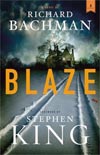
Review: Blaze by Richard Bachman, foreword by Stephen King

Today, in January Magazine’s fiction section, Linda L. Richards thinks about Blaze by Richard Bachman. Says Richards:
I hadn’t intended on reviewing Blaze, Richard Bachman’s posthumous novel. Not because it isn’t a good book -- I pretty much knew that it would be -- but because, on a certain level, there’s just no point in reviewing a novel by Stephen King or, as is the case here, a novel closely associated with him.

See, nothing I say or do here will alter your decision with regards to Blaze. You’re either already a big King fan and have read Blaze or ordered your copy or, at most, are waiting for the book to come out in paper. Or you’re one of those tight-lipped types who were warned about cholesterol when you were 12 and thus avoid it. You were told there were things that were better for you. And while King novels, like stuff with cholesterol, might be delicious, the possible downside haunts your joy, so you don’t stand in that line. And, either way, my words won’t alter your resolve. You’ll either read this and nod your head in agreement or toss your hair in indignation. I’m fine with either reaction. Or both. But, either way, most of the time I figure my energy is better spent telling you about books you might not have gotten wind of, rather than those you come to with predetermination.
The full review is here.

Labels: , ,

Tuesday, August 14, 2007

Interview: Andrea MacPherson, Author of Beyond the Blue and Natural Disasters

Novelist and poet Andrea MacPherson is having a banner year. Her second novel, Beyond the Blue, impressed critics when it was released early in 2007. And now -- four years late, yet somehow right on time -- the debut of her first collection of poetry, Natural Disasters, is confirming that she has those chops as well.

In her January Magazine interview, MacPherson chats about the connections between poetry and prose, the joys of writing and teaching, the birth of a dream and “the strange and wonderful world of publishing.”

The full interview is here.

Labels: ,

Thursday, August 02, 2007

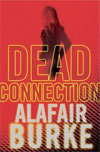
Review: Dead Connection by Alafair Burke

Today, in January Magazine’s crime fiction section, Linda L. Richards reviews Dead Connection by Alafair Burke.
Midway through Dead Connection there’s this moment where everything seems to hang in the balance and you wonder how author Alafair Burke is going to pull this thing off. The story is just so ambitious. And there are enough good ideas here for three smart books. Internet dating. The Russian mafia. Corrupt cops and compromised FBI agents. Identity theft. A possible serial killer. More. And in this midway moment you think there’s just no way that all these things will come together in a manner that will make any kind of satisfying sense. And then it does. I mean, it really does.
The full review is here.

Labels: ,

.